February 14
I was excited to wake up at 4 am to get started on our long hike and visit to Corcovado Park. This park is not easily accessible. You have a choice between boating or hiking in, which takes 6 to 8 hours. There are no roads in the park. We had visited this national park back in February 2020 by boat but only on two half-day tours. This time we would be spending three entire days there, including sleeping at the Sirena ranger’s station for two nights. You must have a permit to enter the park and be accompanied by a guide. The number of visitors allowed in each day is very limited so you need to plan well in advance. We booked our hike with Surcos Tours. https://surcostours.com/
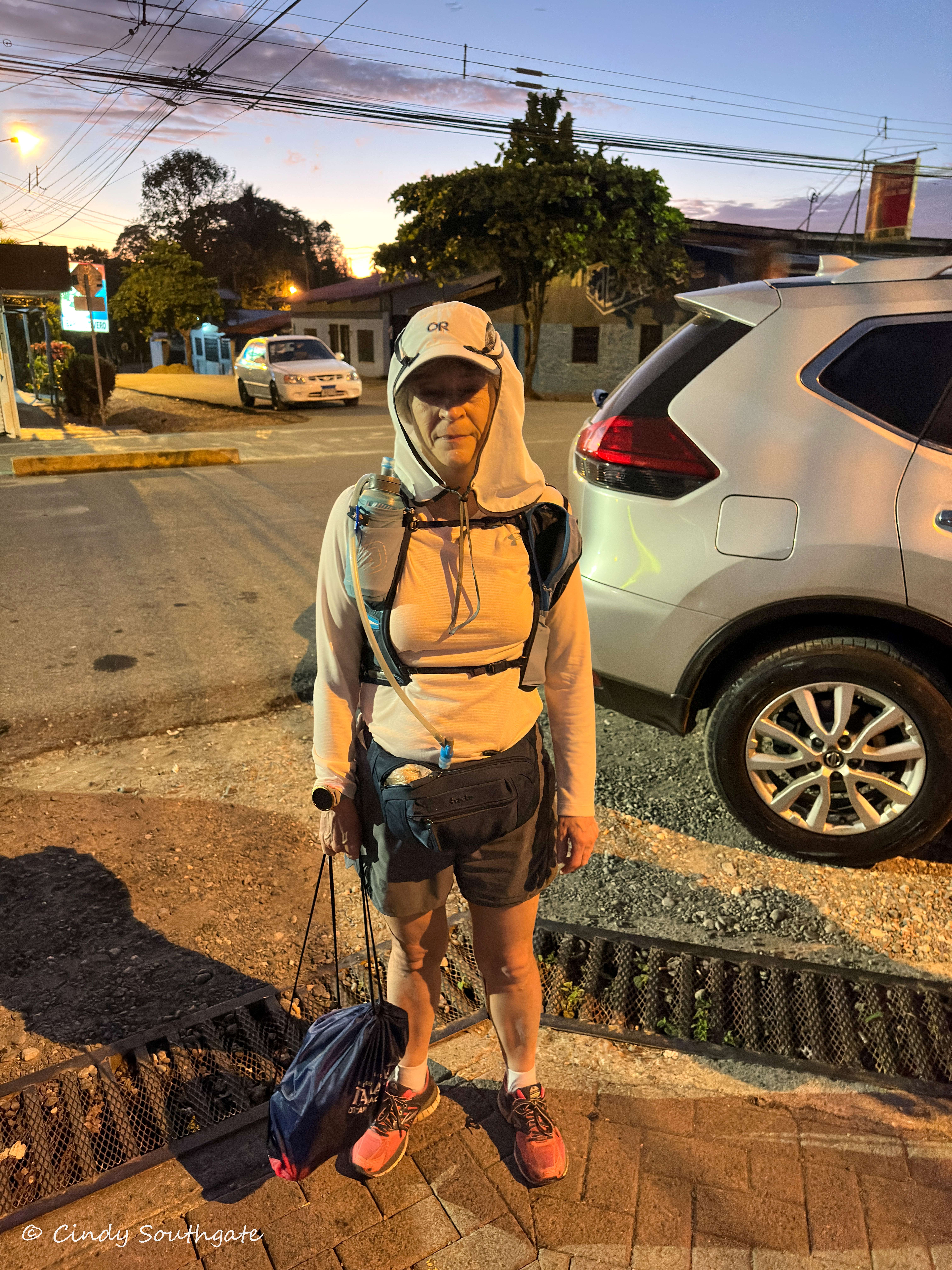
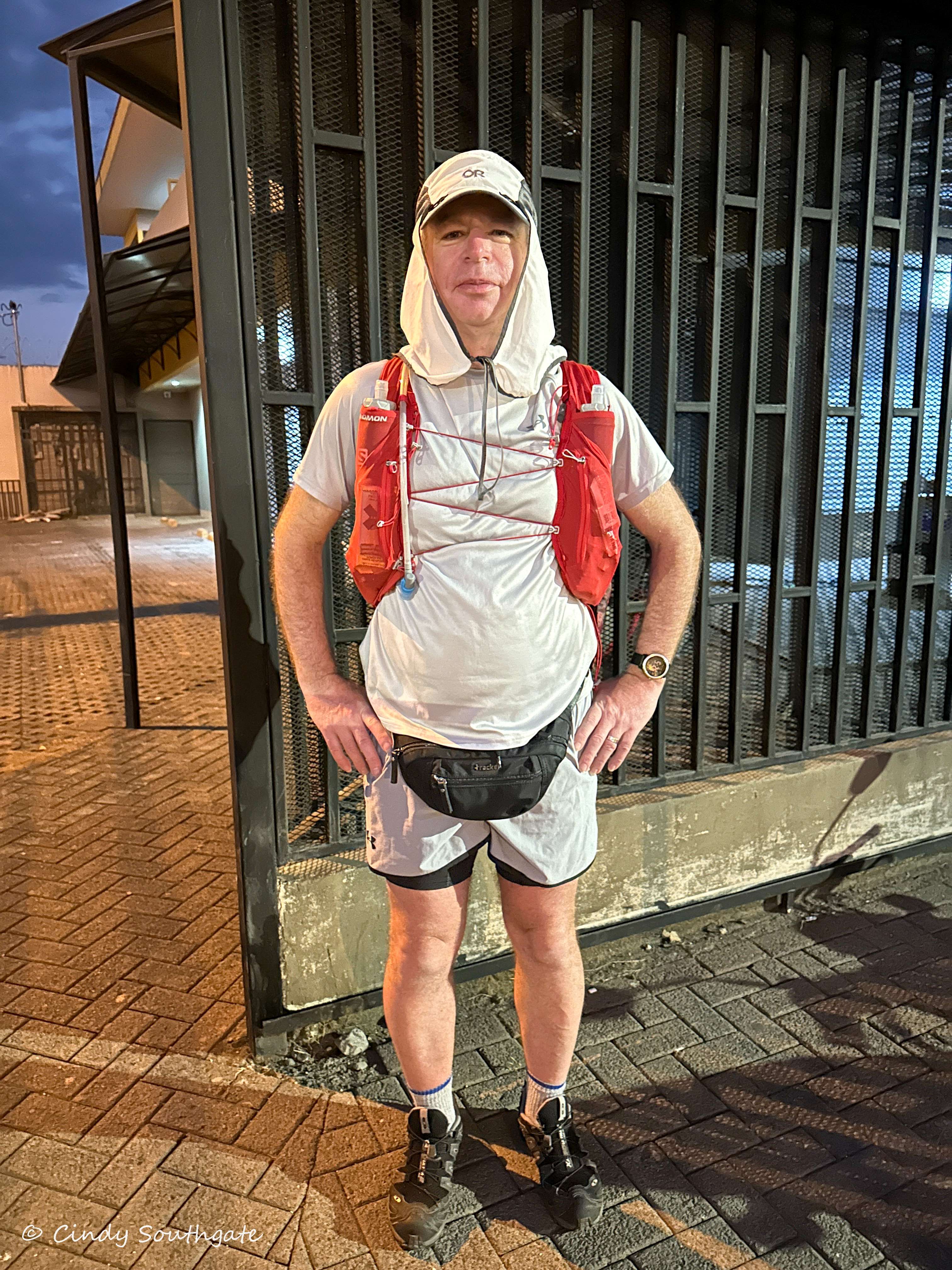
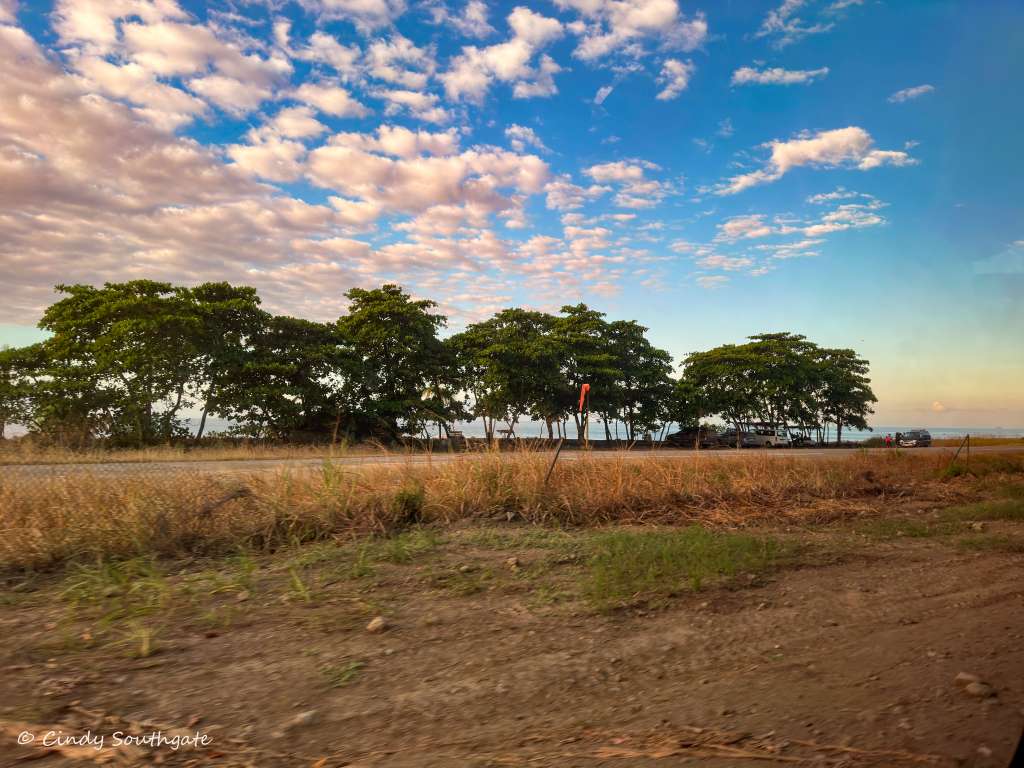
Loaded up with all our gear, we met our guide Josue (pronounced Ho-sway) by the bakery in Puerto Jimenez at 5 am where we bought sandwiches for our lunch. There were quite a few people gathered for similar tours. We had a driver to take us, our guide and one other couple 1.5 hours down the road to where we would begin our hike just past Carate. The dirt road was very bumpy.
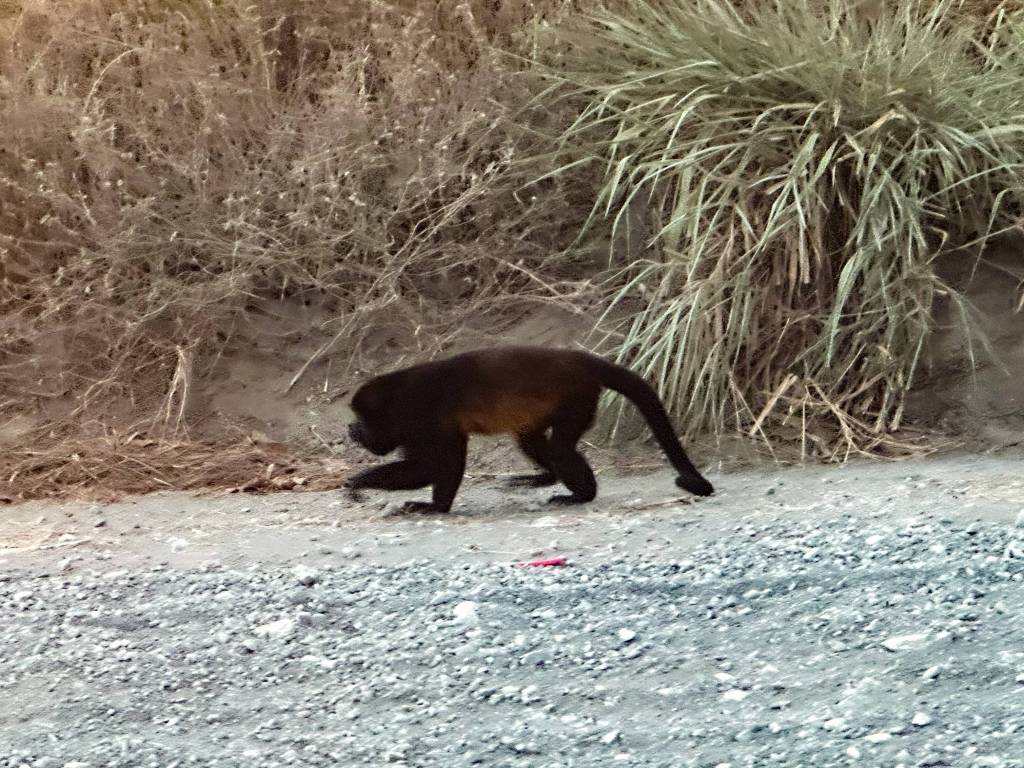
Along the way we passed this Howler Monkey that was travelling down the road. Our guide speculated that he had been kicked out of his tribe.
We arrived at La Leona ranger station and checked in. This is as far south as you are allowed to go without a permit. We would start our 20 km hike here.
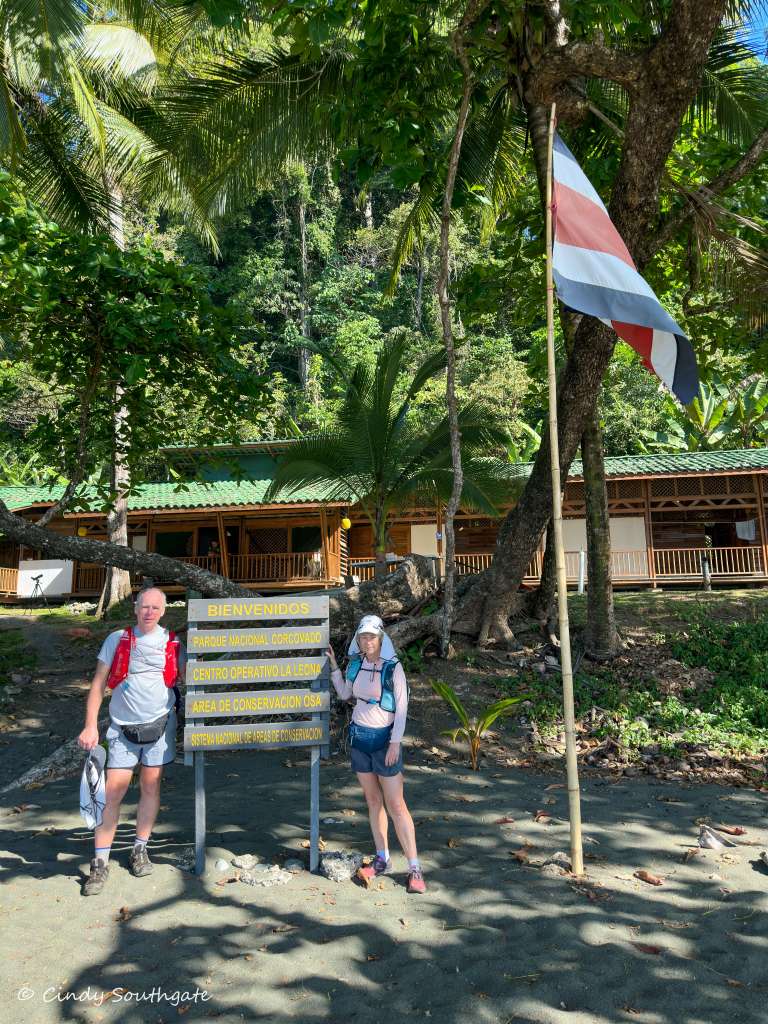
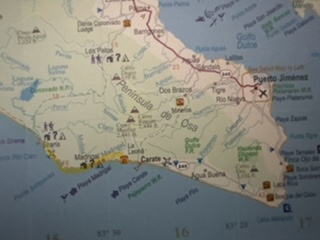
Corcovado park is located in the southern part of the Osa Peninsula. It covers 40% of the region and is extremely biodiverse as it has up to 250,000 different animal and insect species living there. National Geographic has named it the “most biologically intense place on earth”.
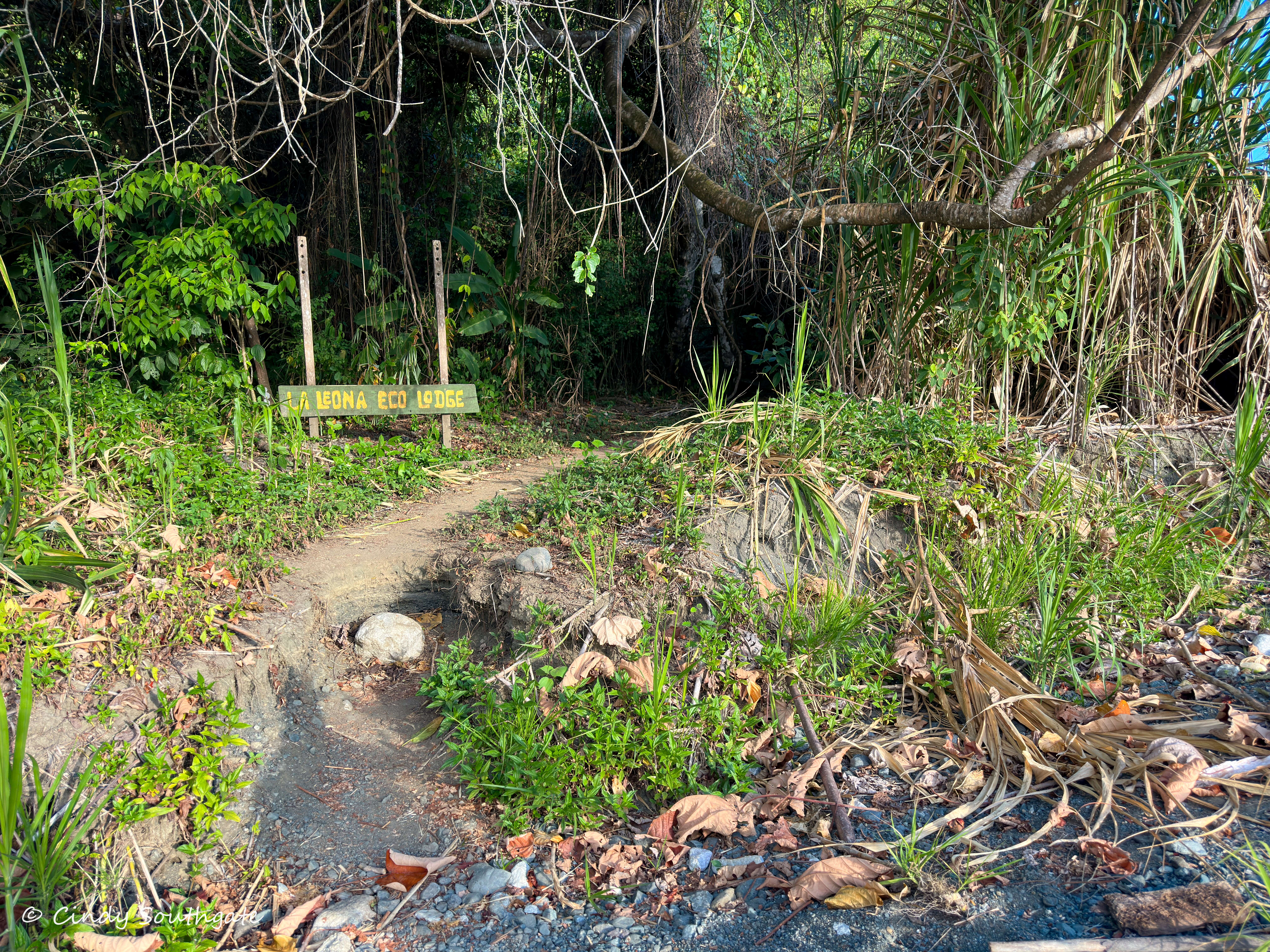

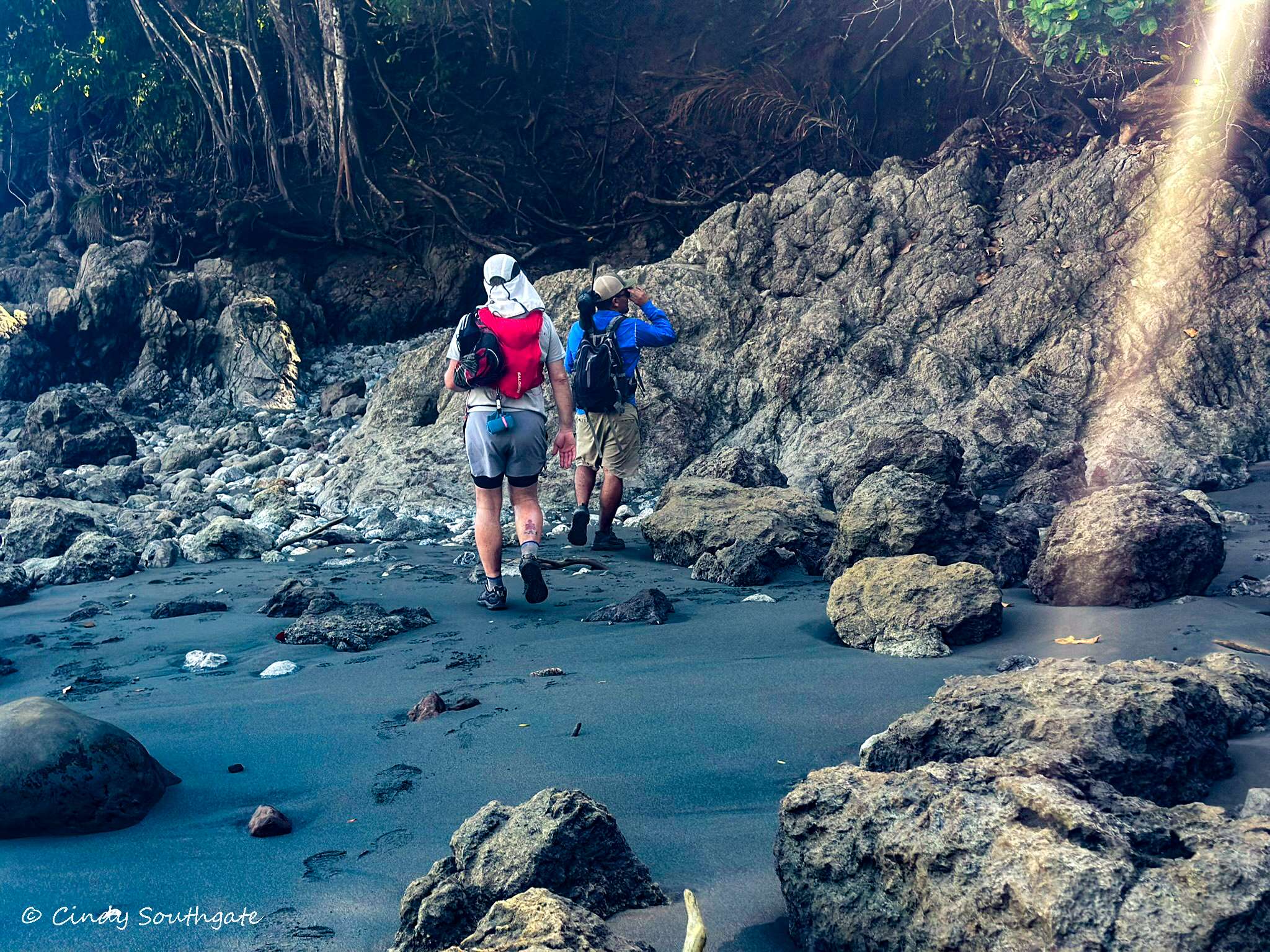
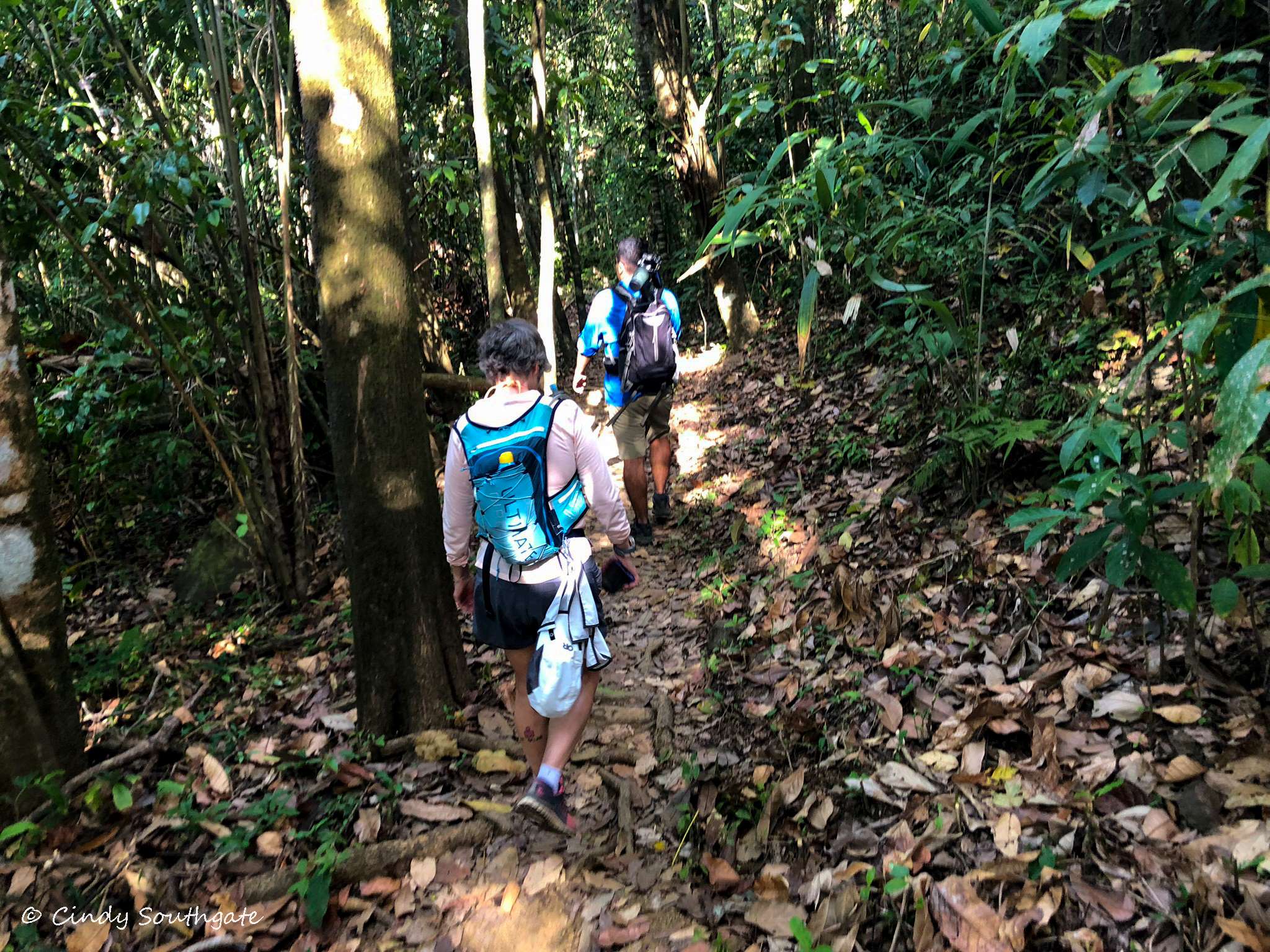
We started our hike by following the trail into the rainforest. Over the day we would alternate between forest trails and the beach. We carried sunscreen and lots of water to offset the hours in the sun and the humidity, which made our already heavy backpack much heavier.
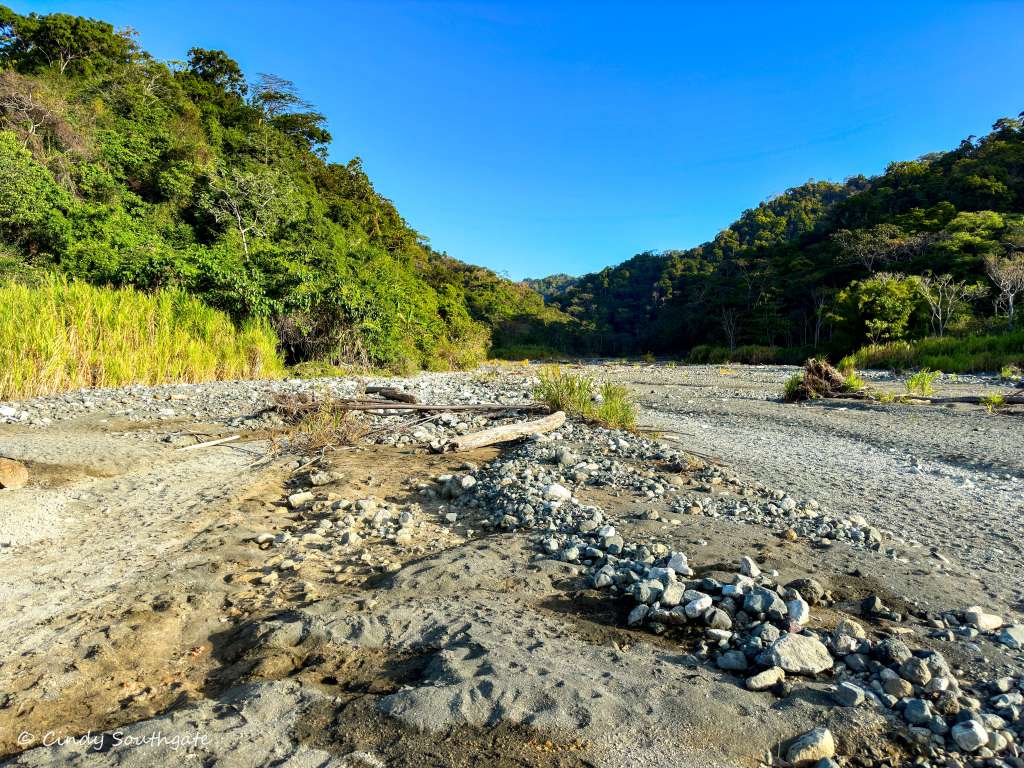
We would cross several rivers or streams, some of which were dry. February is the middle of the dry season.
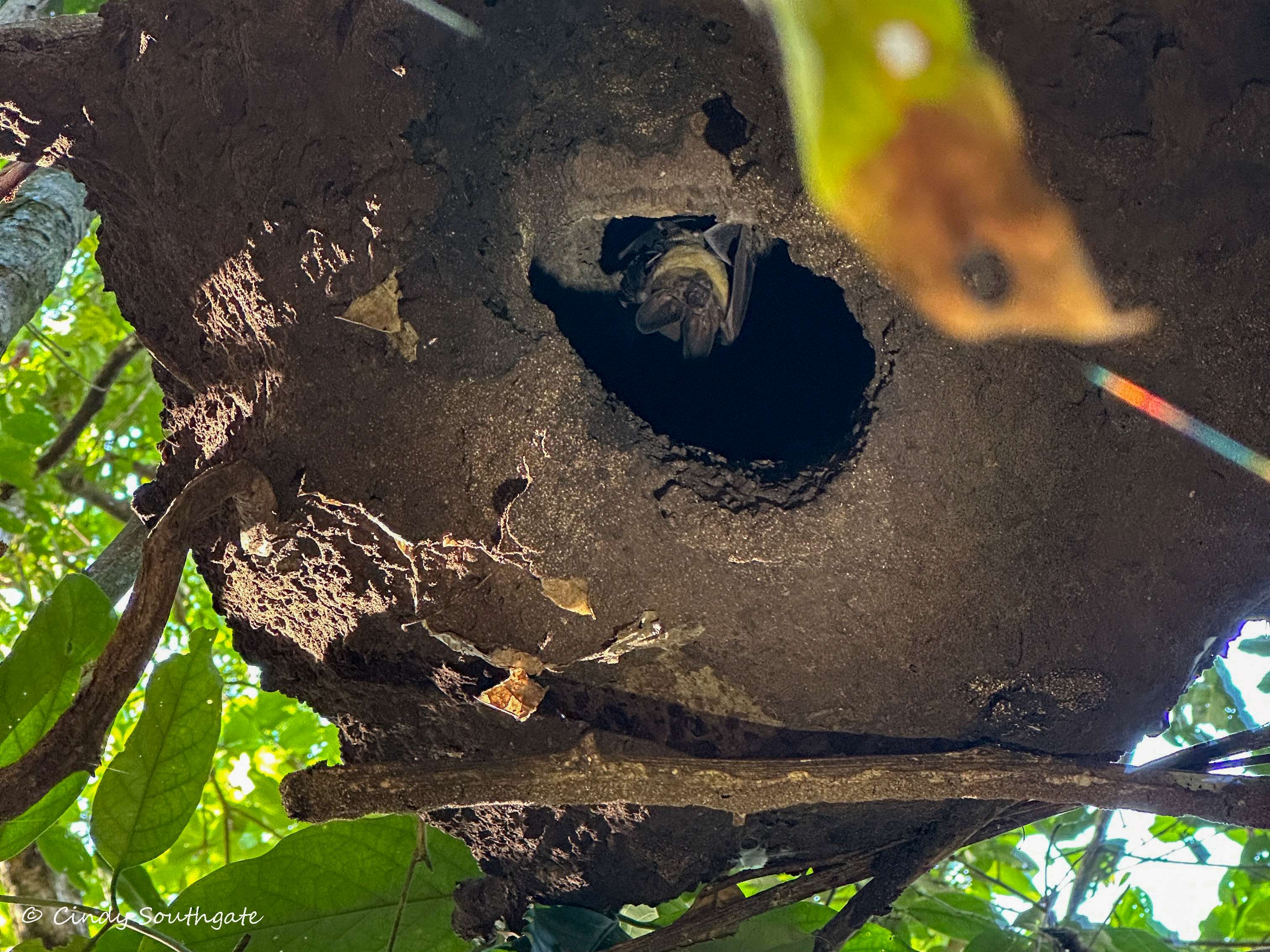
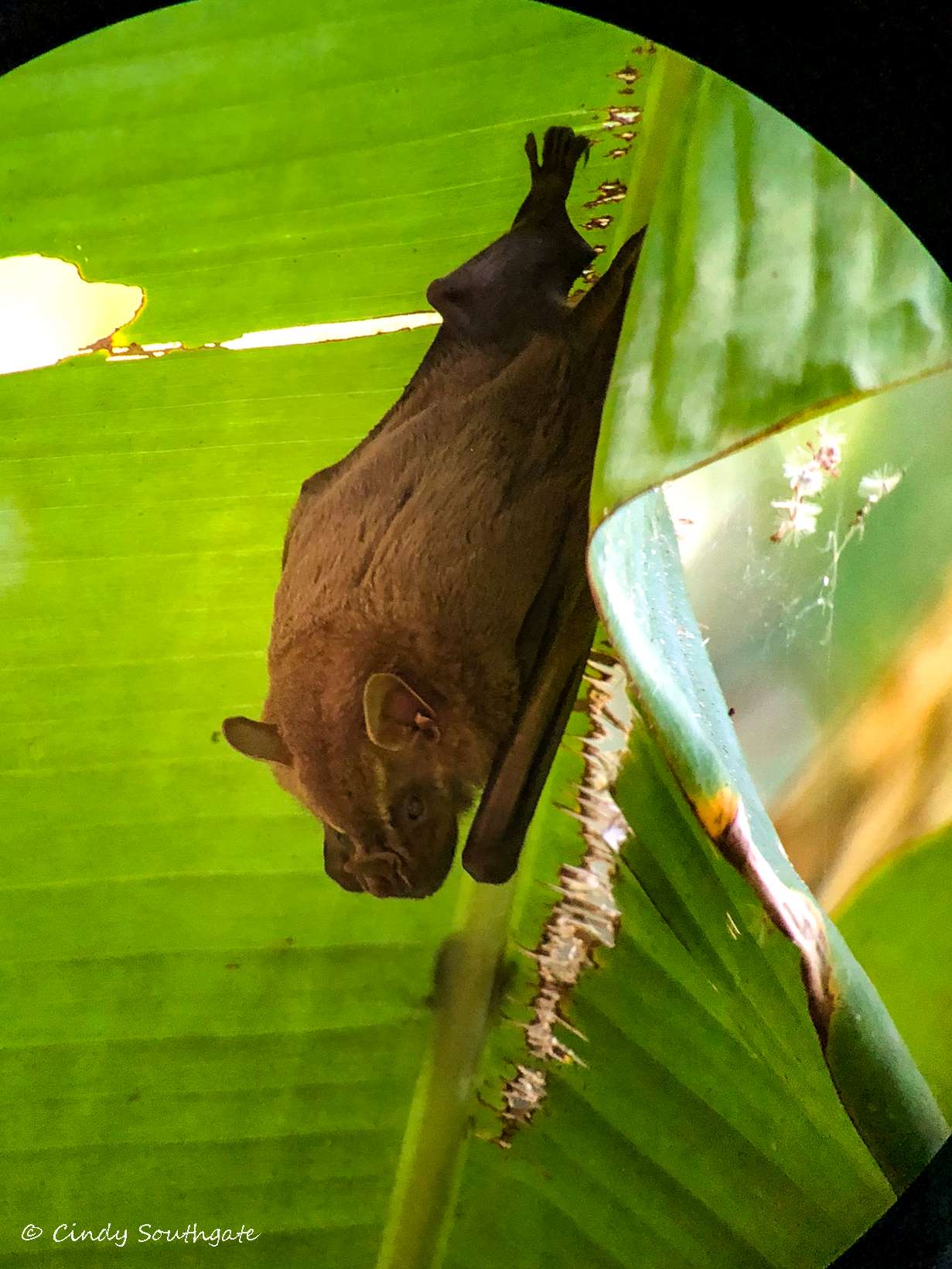
Our guide spotted many different animals and birds along the way including the White Throat-ed Bat above and the White Lion Bat. We saw Hummingbirds and a Hawk.
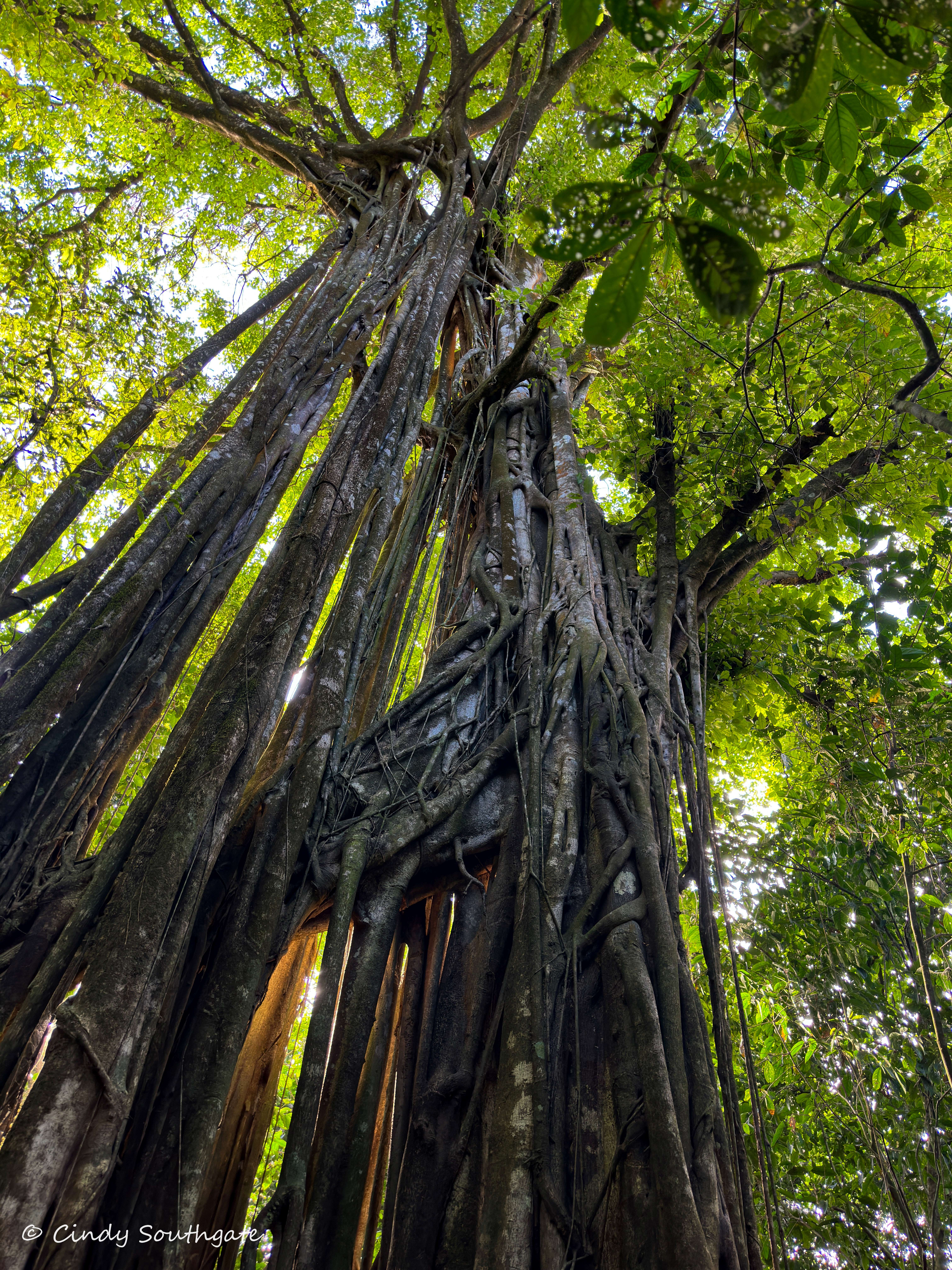
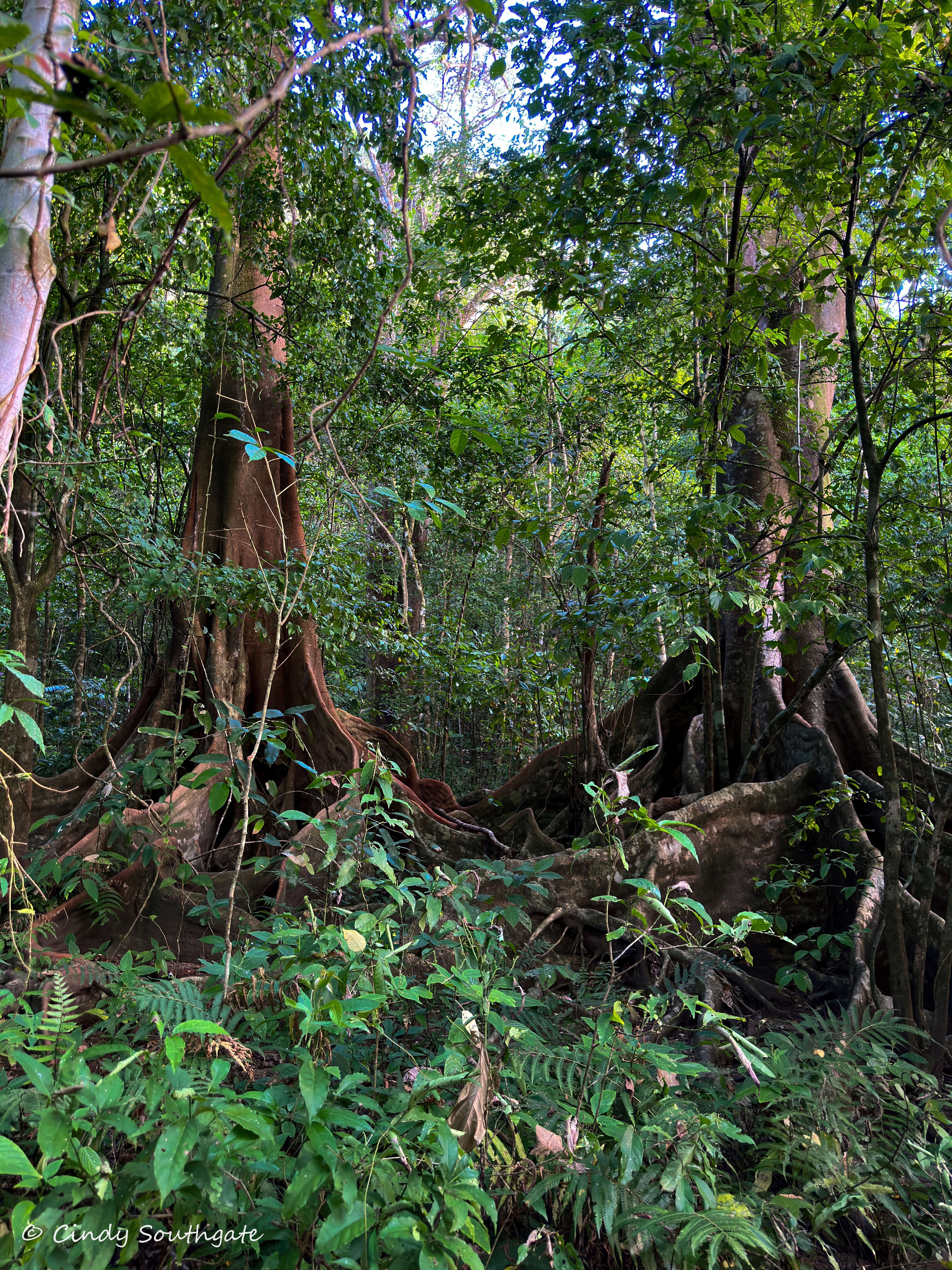
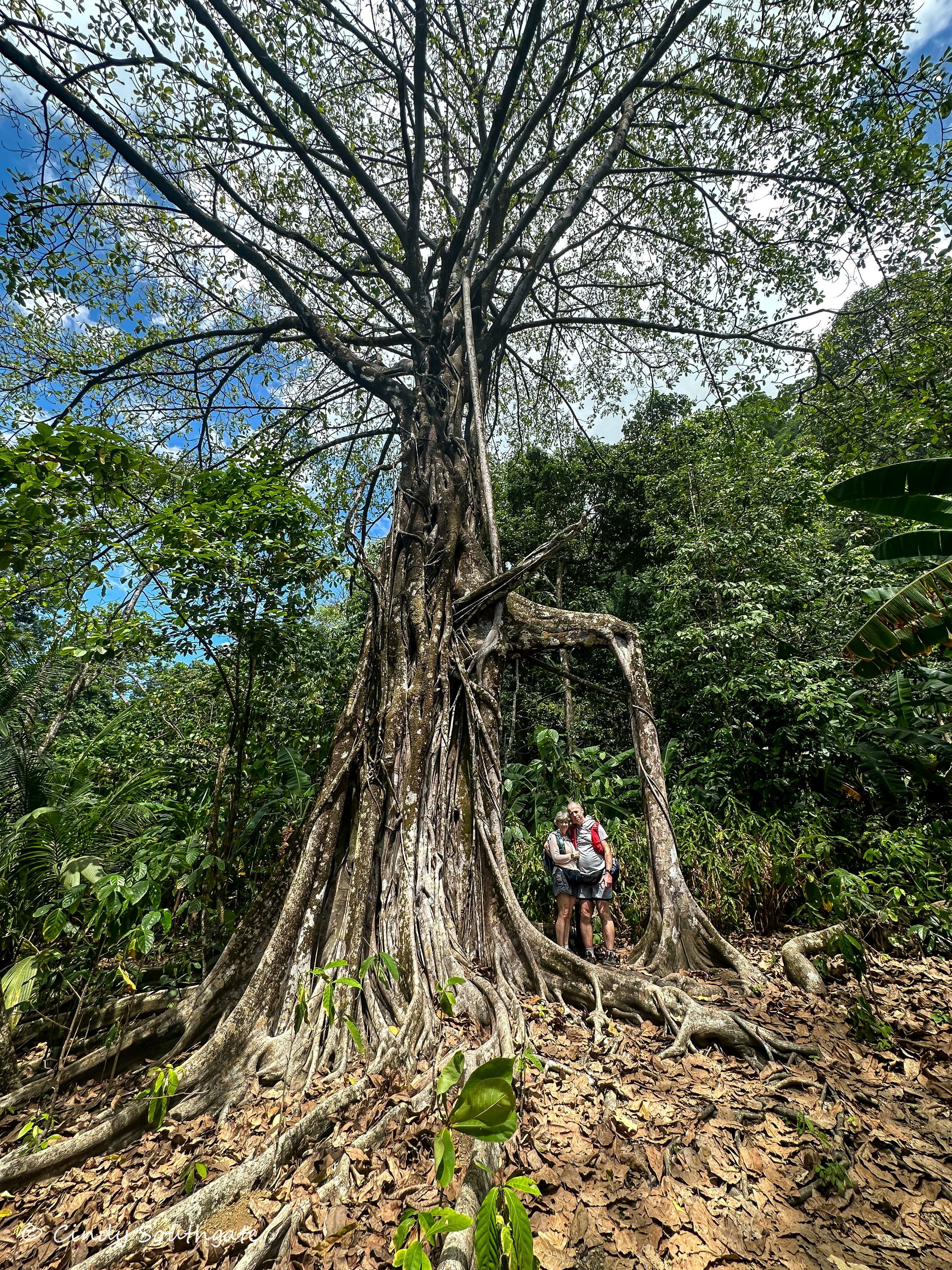
I also love seeing all the different plant life as it is so different from what we have at home. The trees often have buttressed roots because the soil is actually quite poor here. These buttresses help anchor the tree plus leaves tend to gather between them which provides a source of nutrients. They also absorb oxygen from the air.
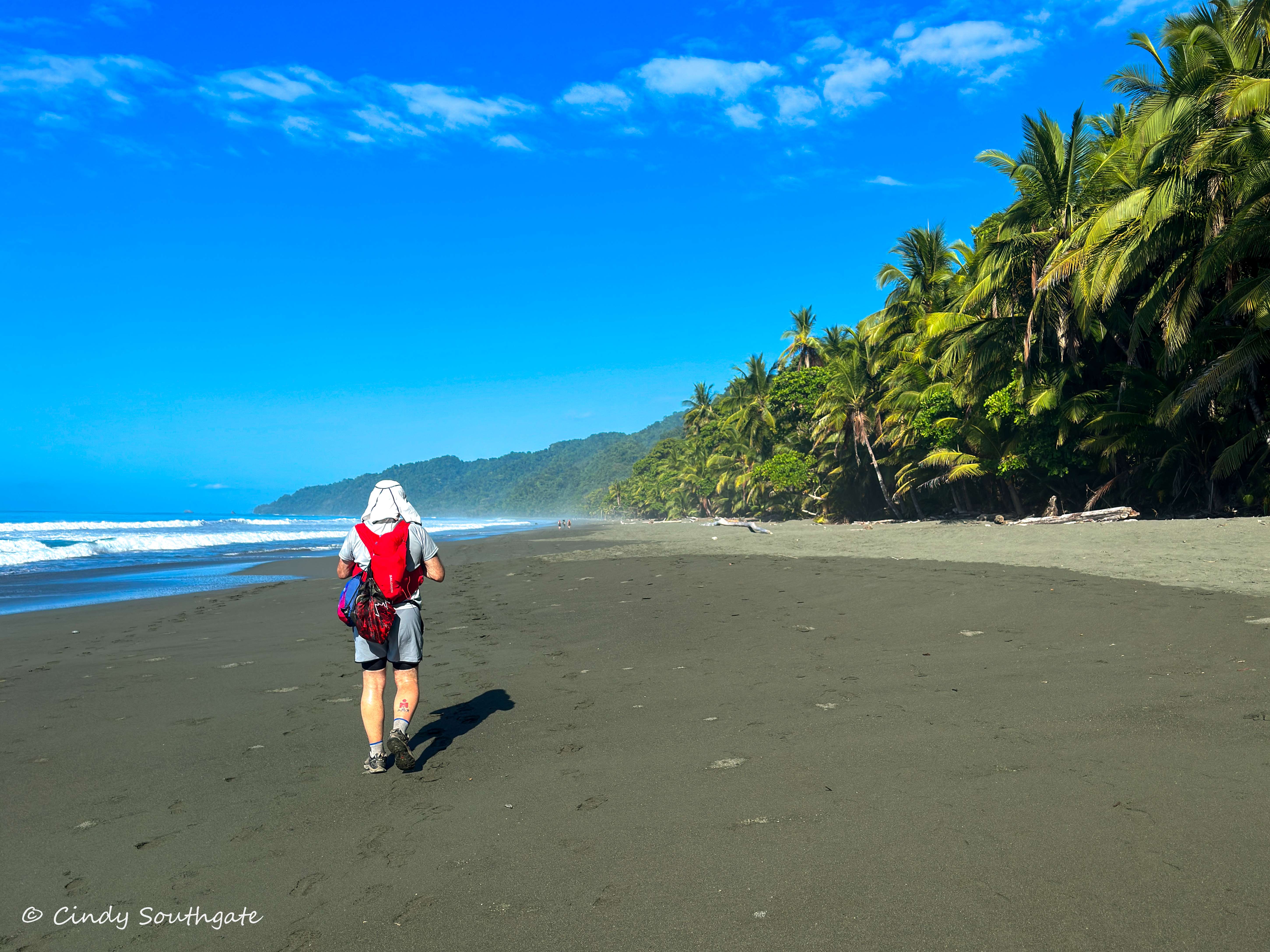
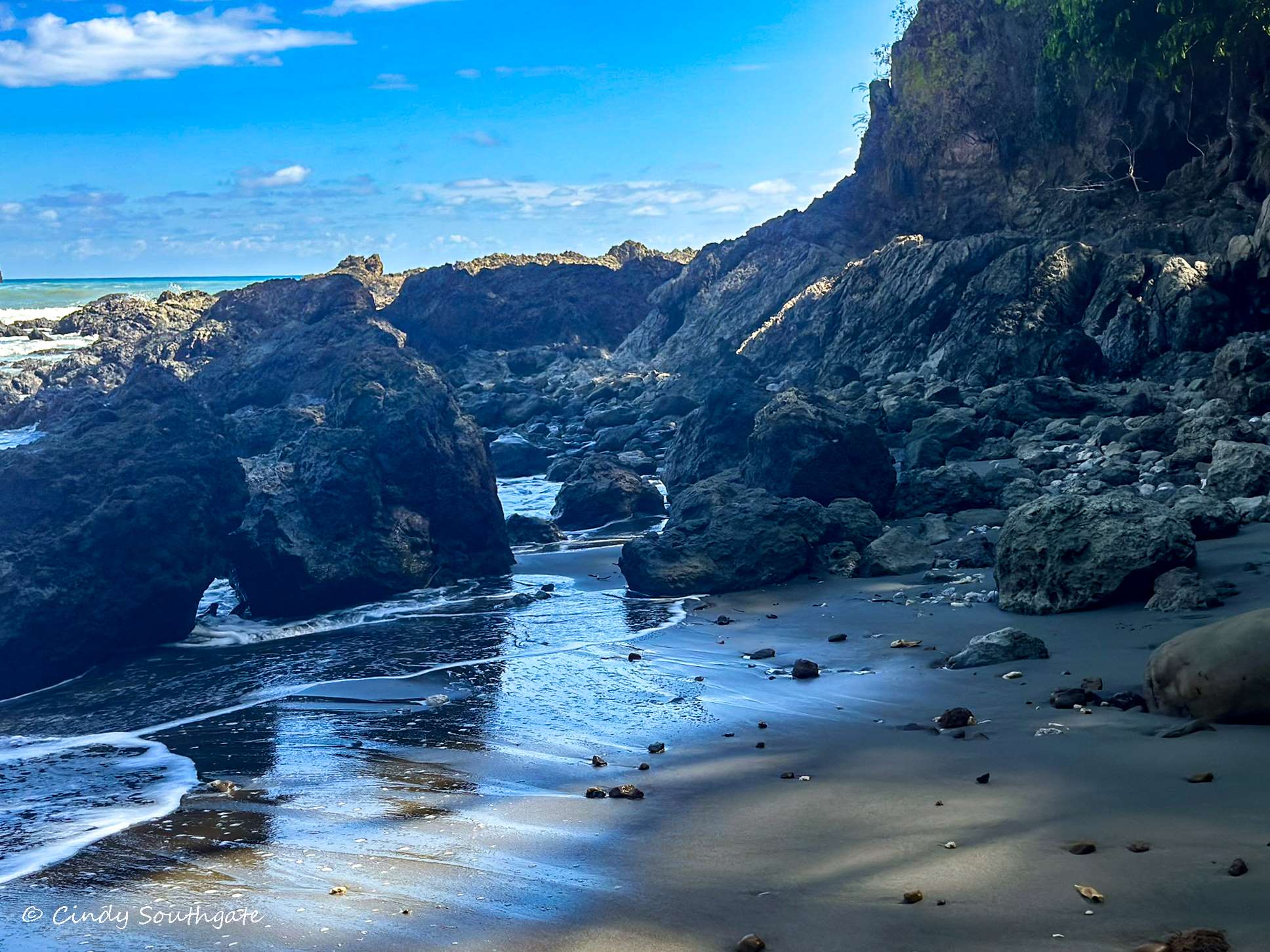
We covered several kilometres on the beach. We saw a few other hiking groups but it was mostly deserted. Very few people choose to hike all the way into the park and even less people hike both in and out. Our guide kept asking us if we would like to take a boat out on the last day but we really wanted the chance to see the rain forest and hike where very few others have gone.
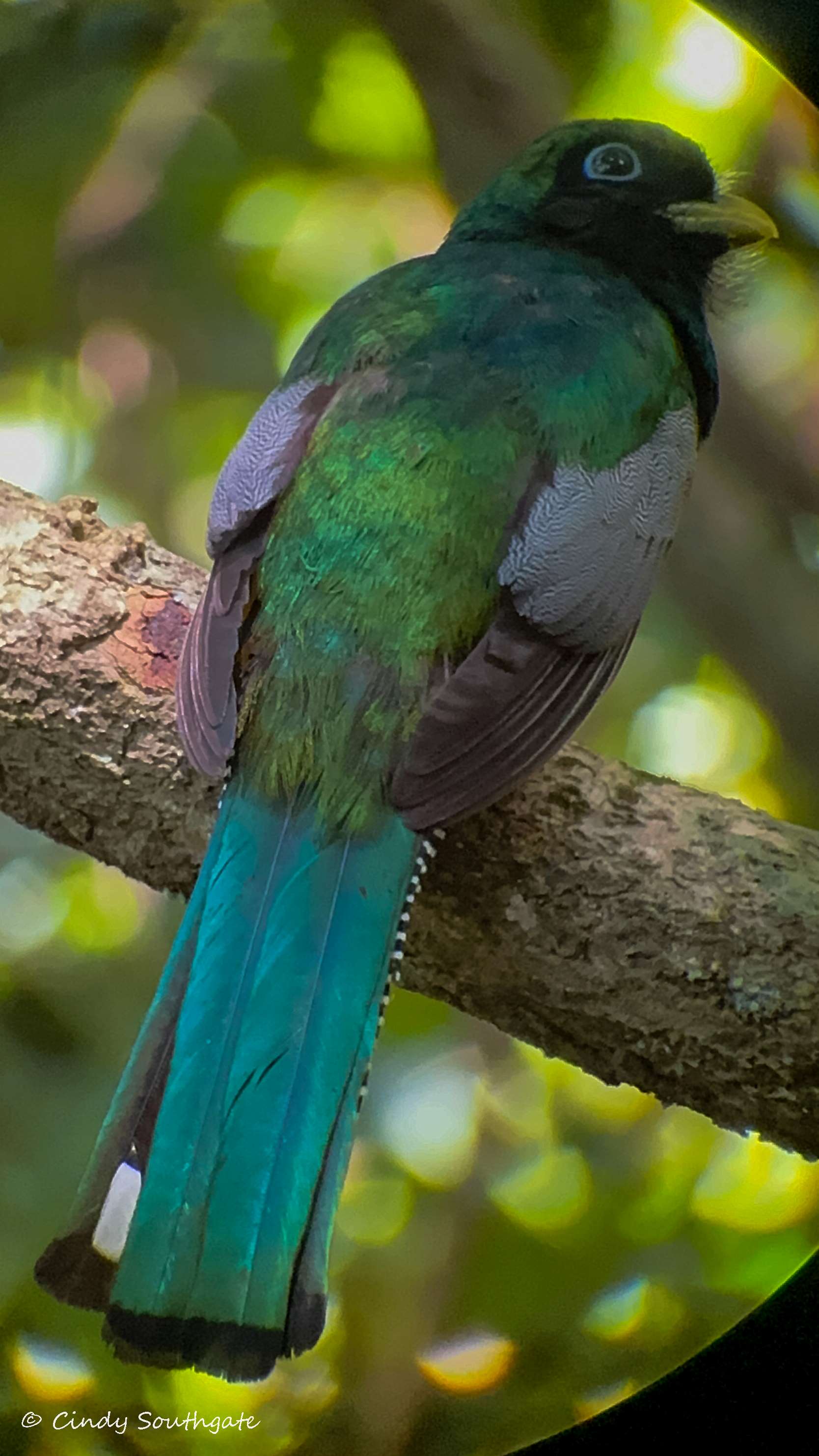
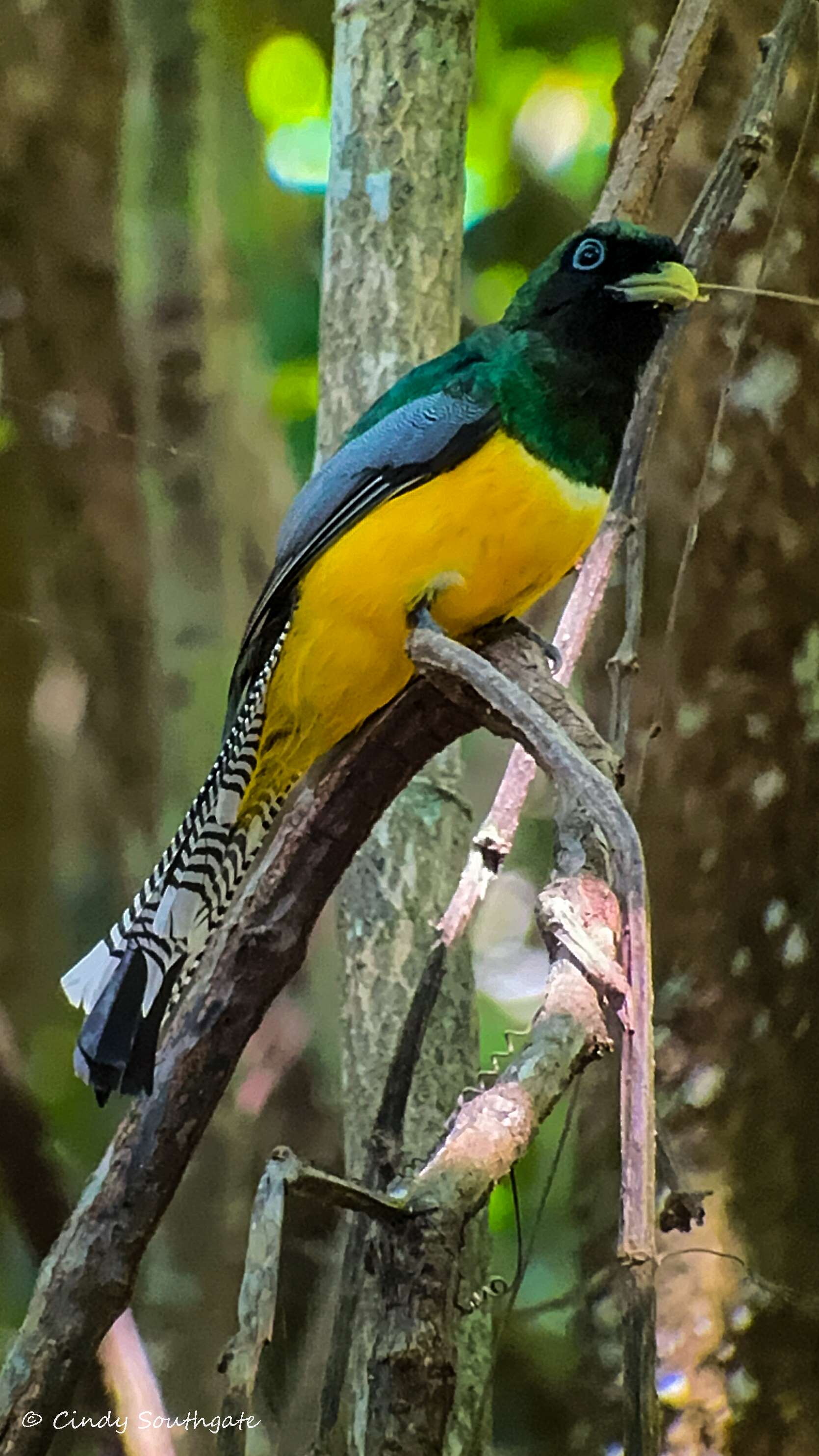
With the help of our guide’s scope, we got a picture of this beautiful Trogan. He was enjoying a cricket.
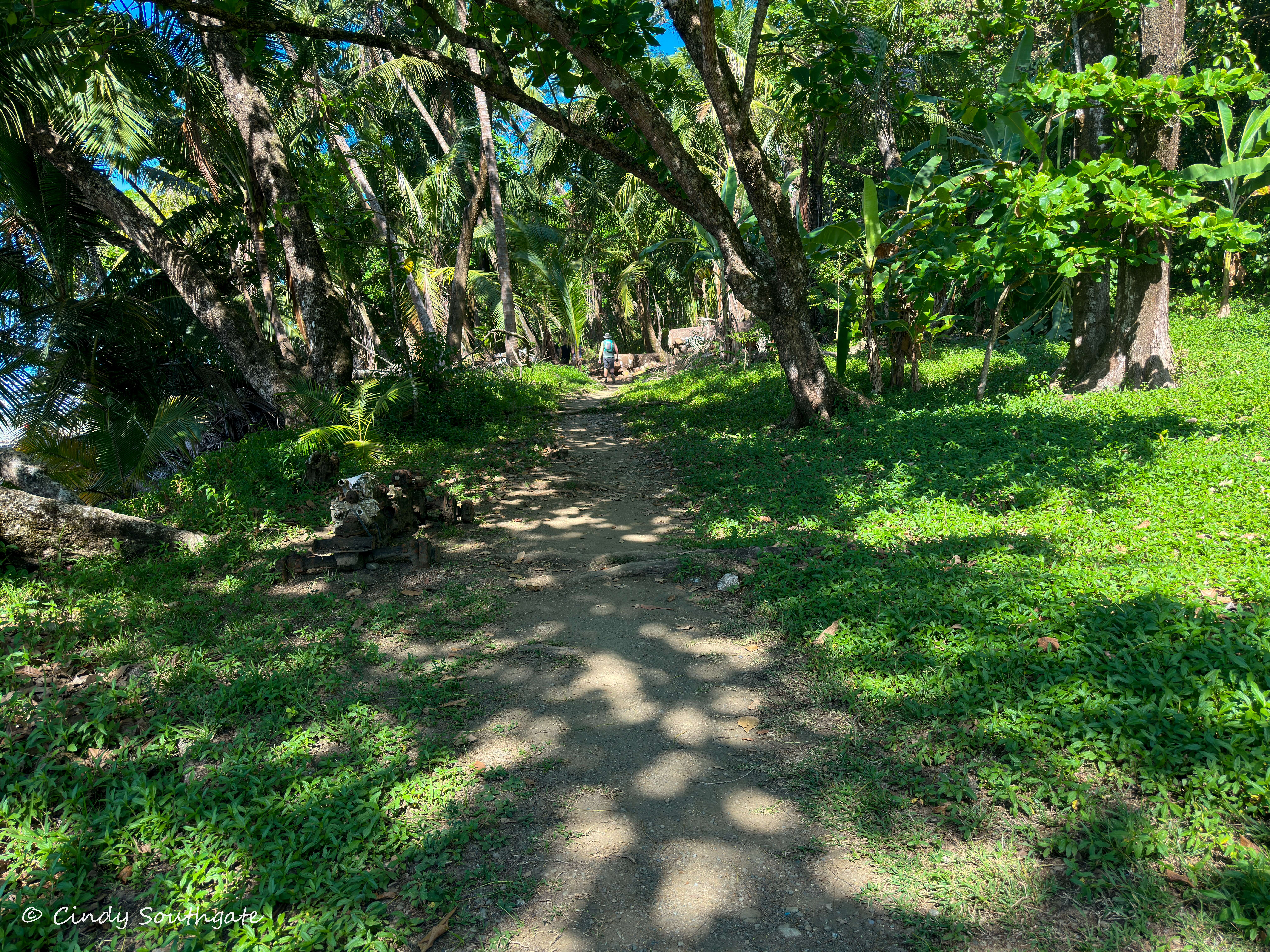
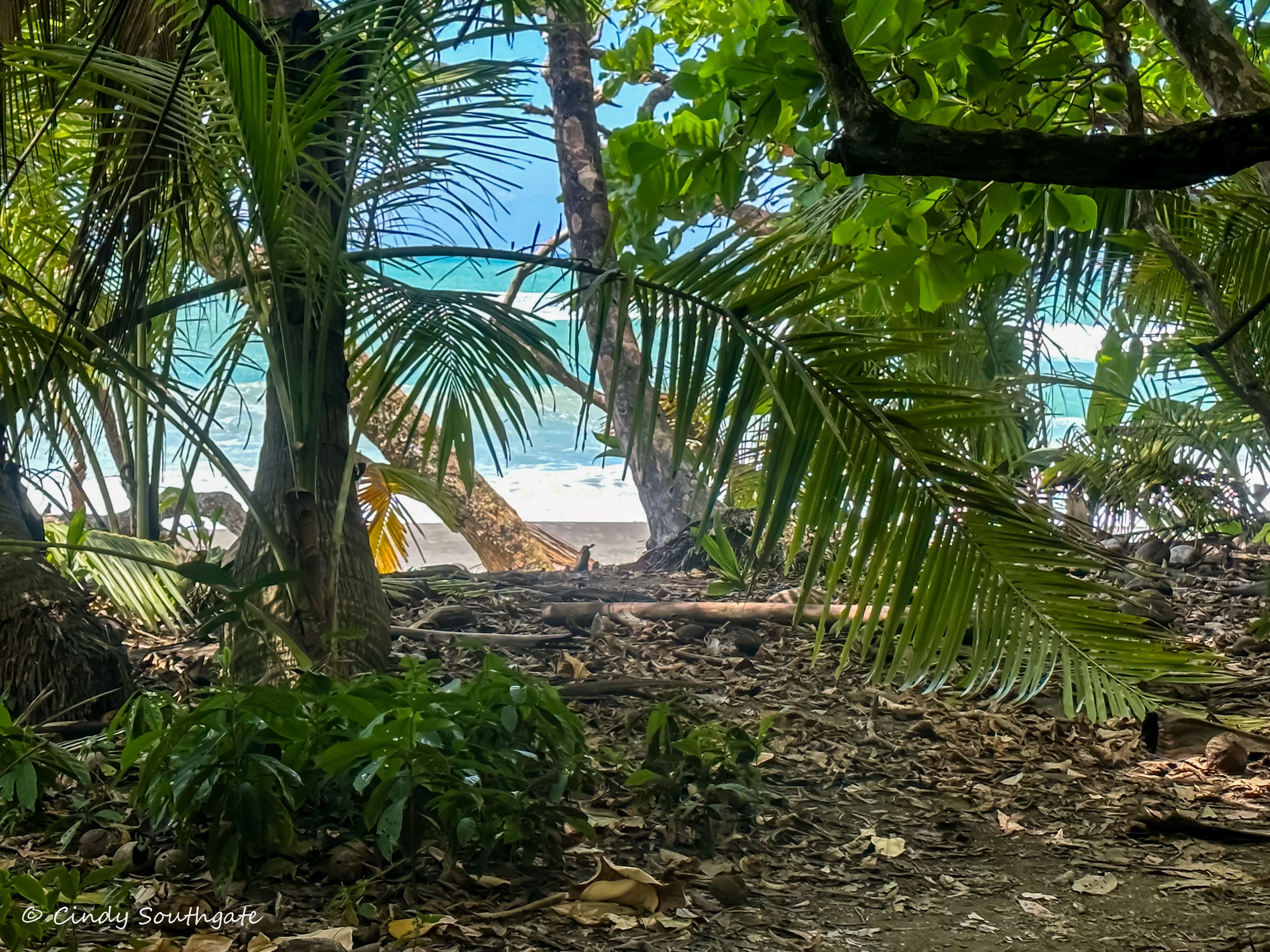
Some of the trails were flat and easy to walk on. We often caught a glimpse of the ocean through the trees. It was a nice relief from the hot sun.
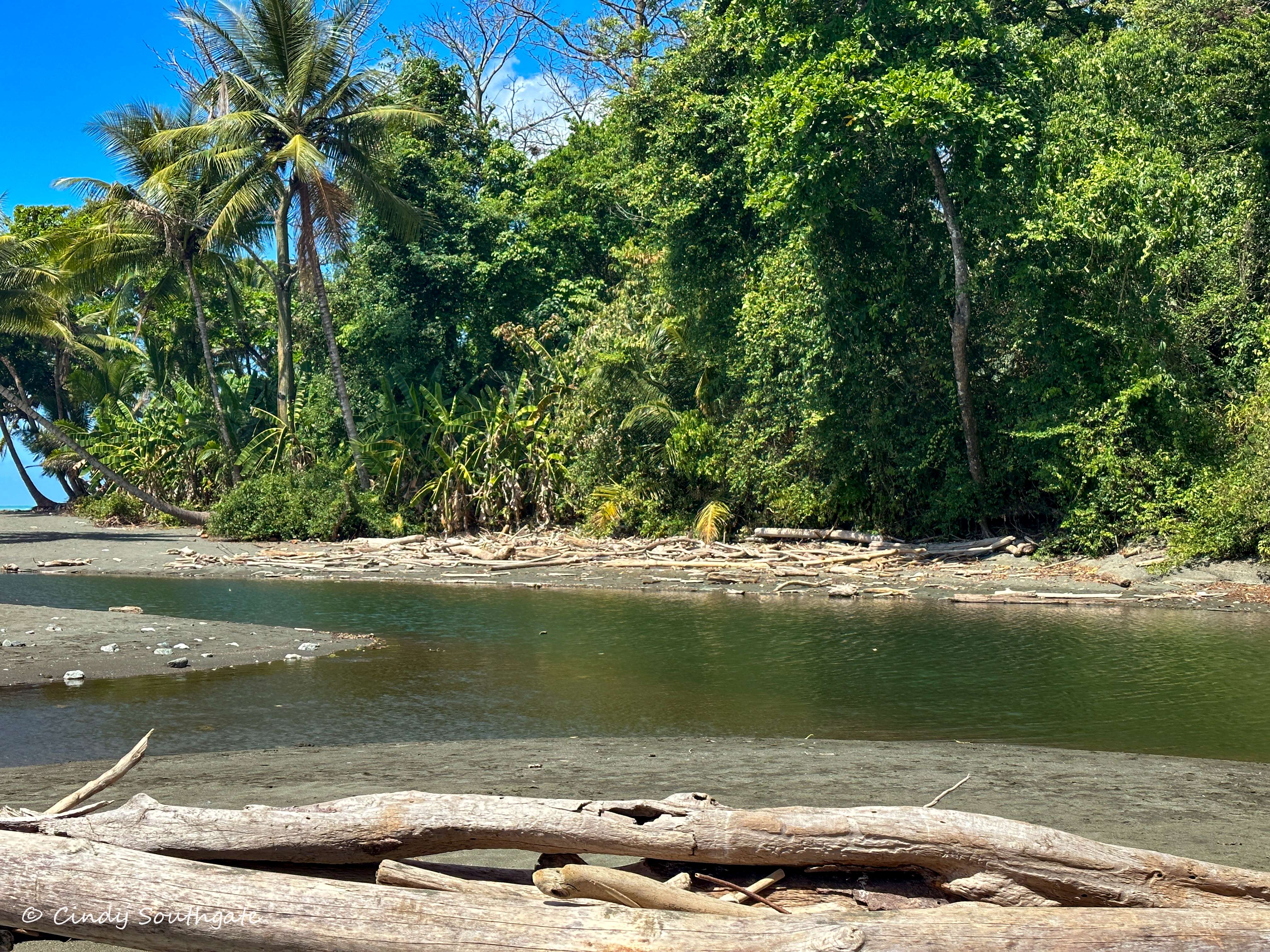
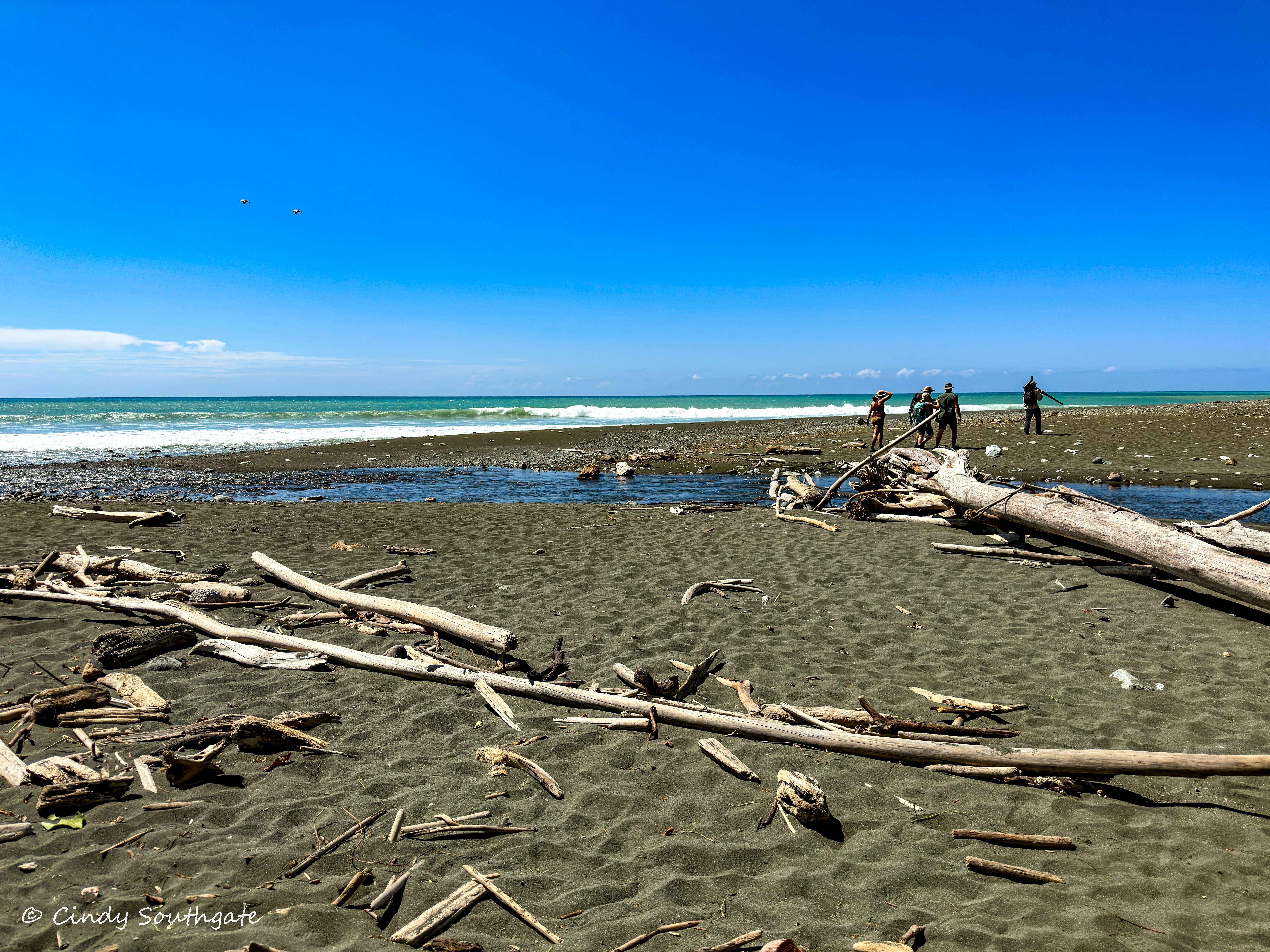
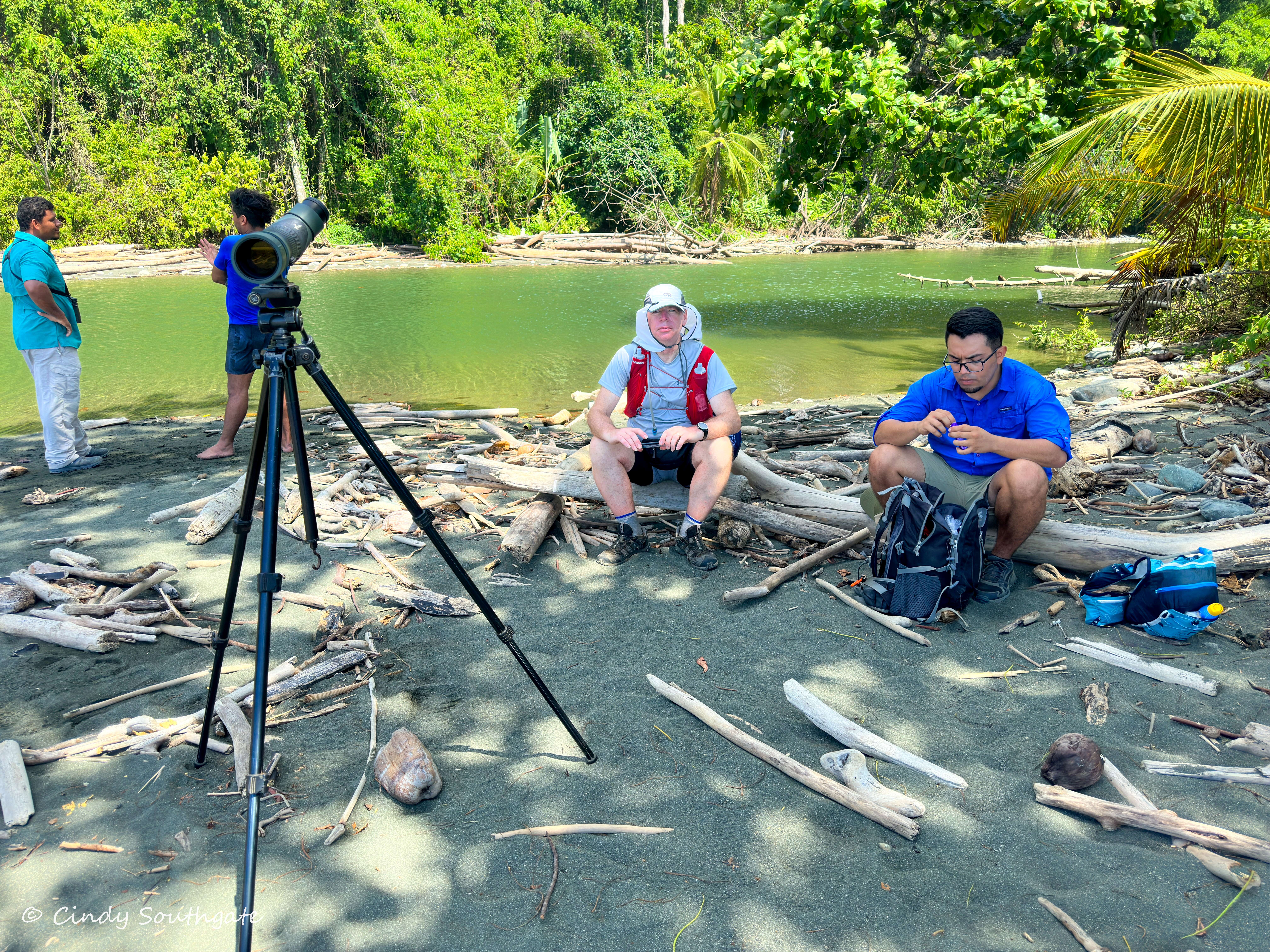
We needed to reach the Rio Claro before high tide because of the risk of running into Crocodiles and Bull Sharks. Several people stopped here for a lunch break.
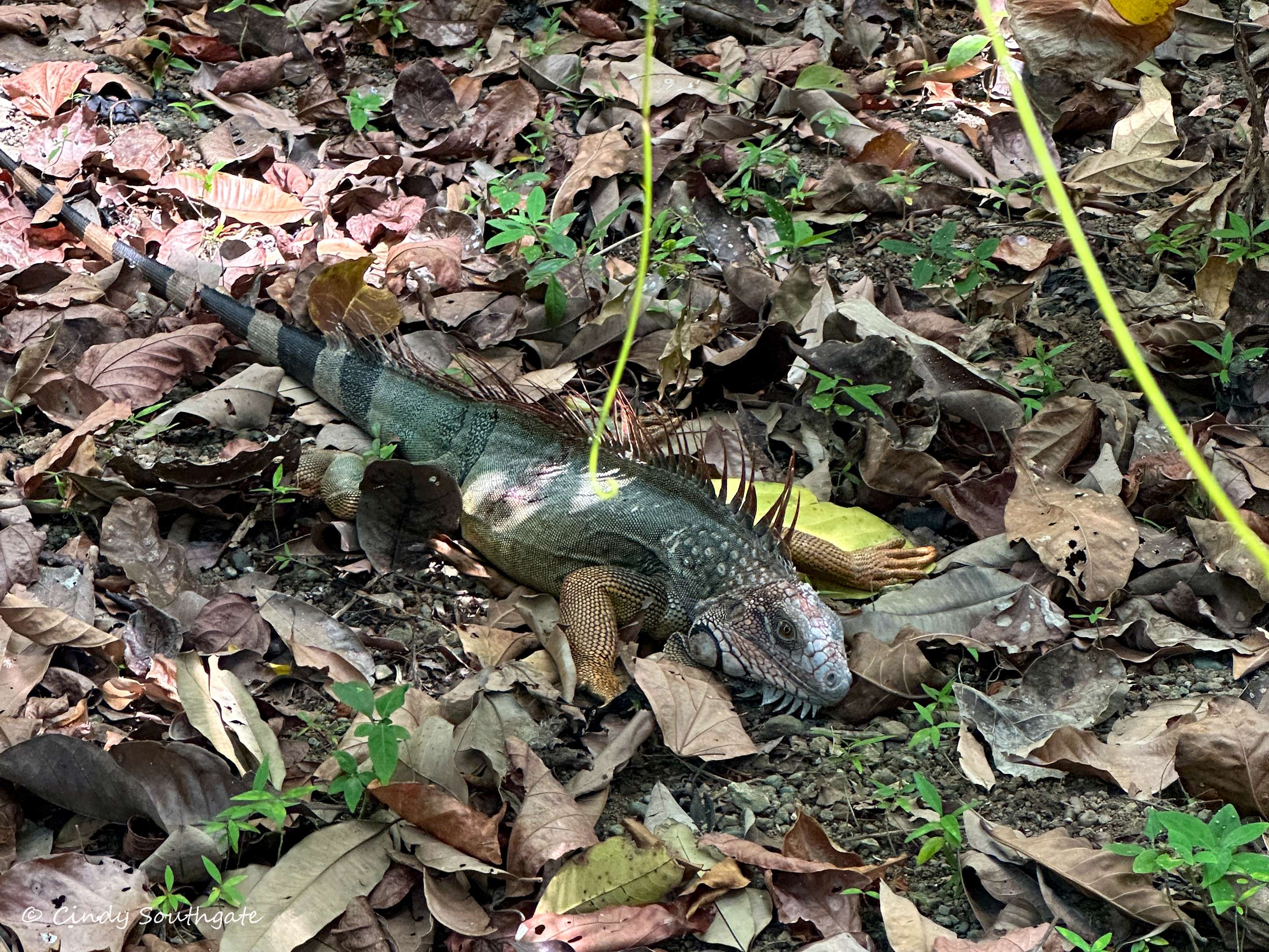
We saw a few Iguanas during our hike. We also saw a Weasel but weren’t able to get a picture.

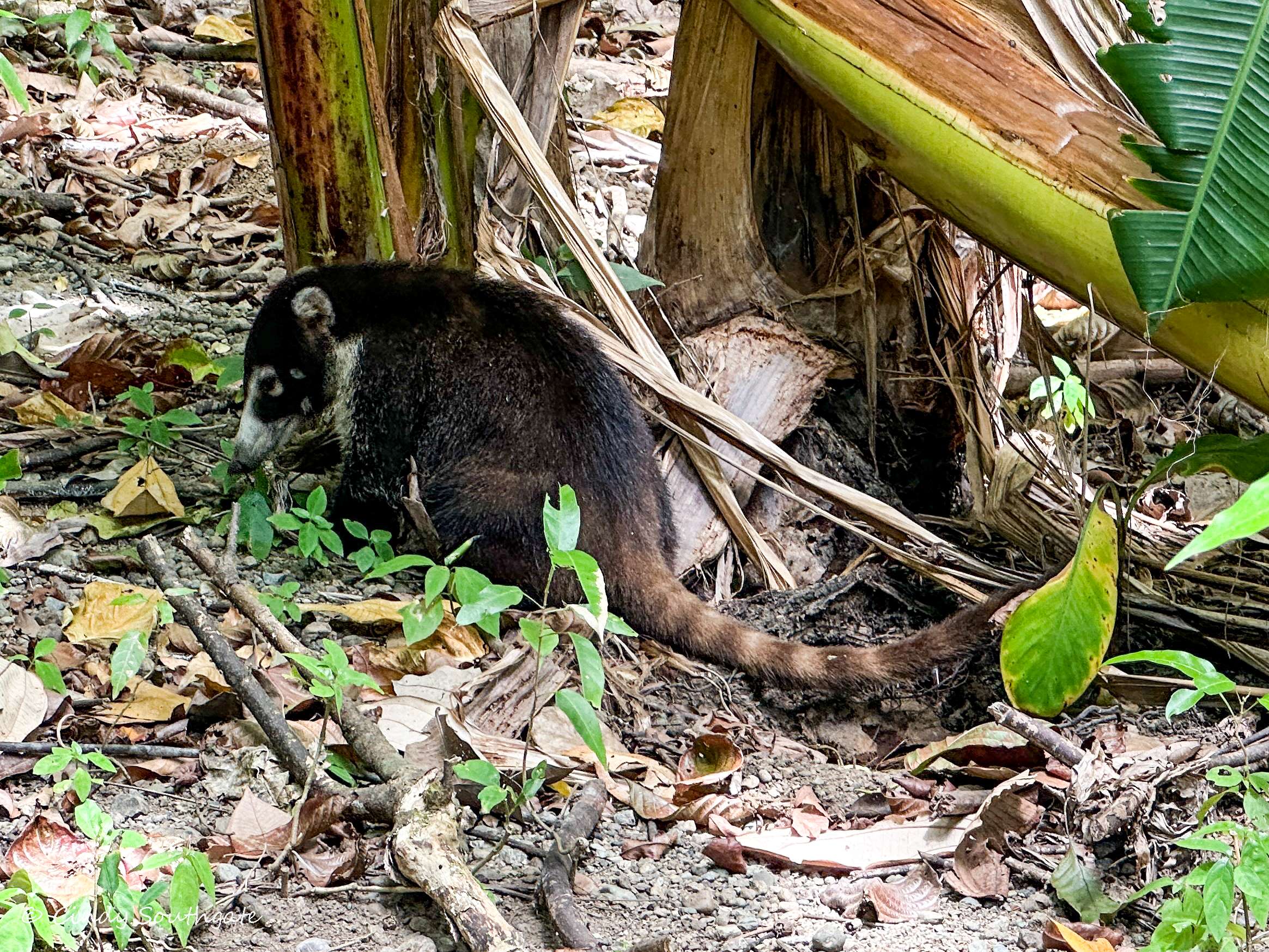
Coatis are plentiful in the park and we observed groups with as many as 30 to 40 members. The females travel together and the males are solitary unless they are breeding. They resemble raccoons but have a long pointy snout. They didn’t seem to care that we were there.
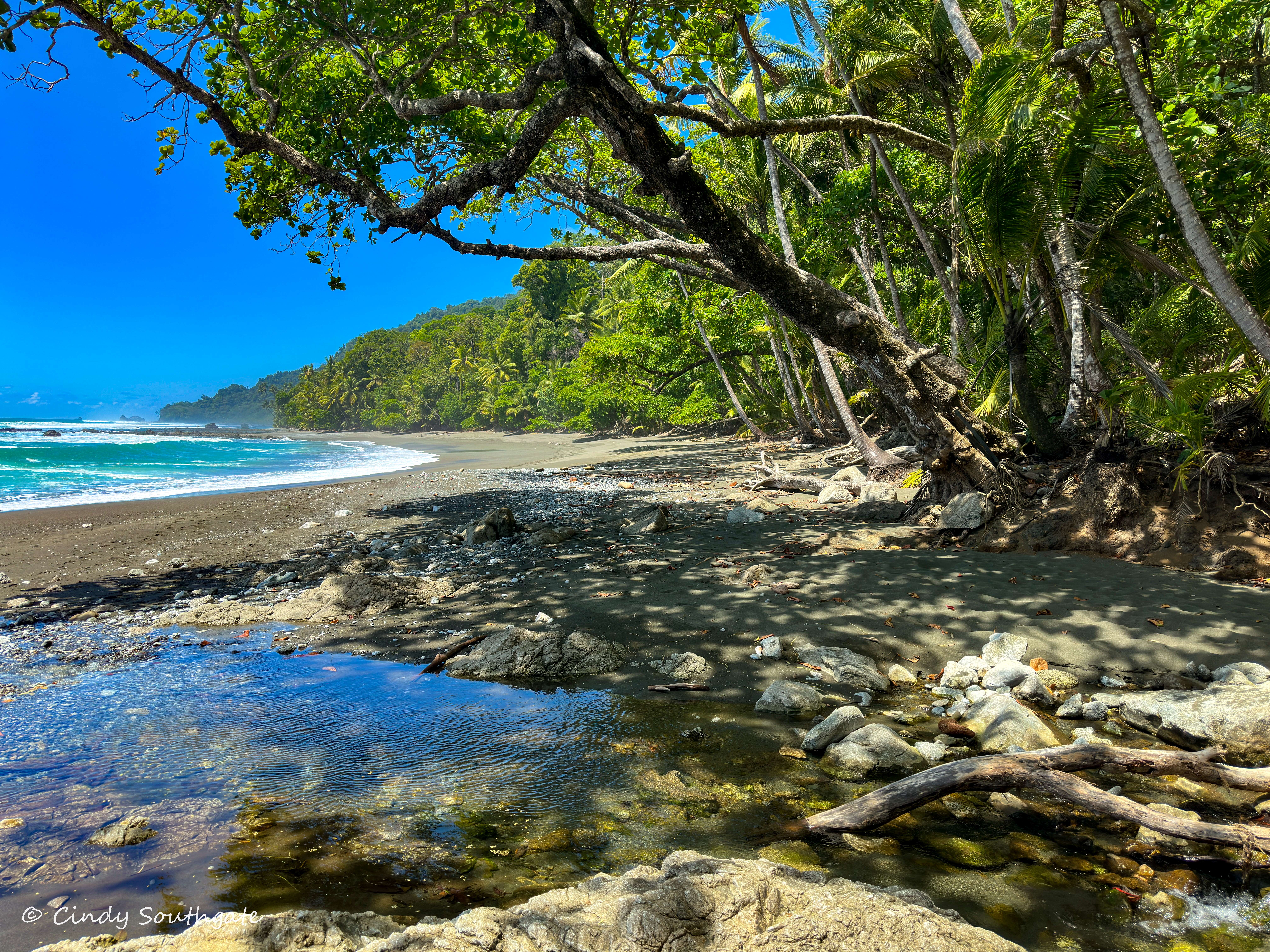
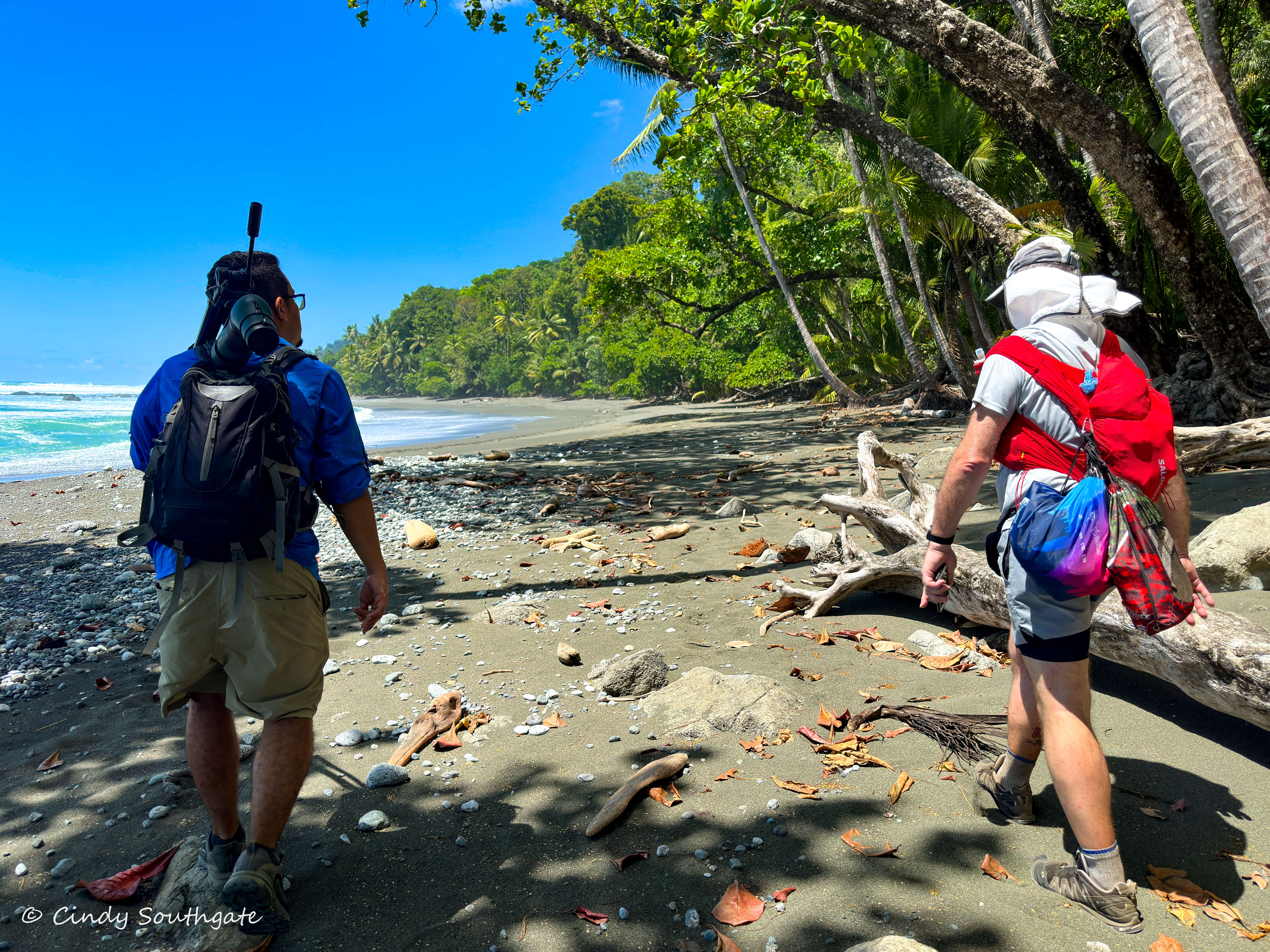
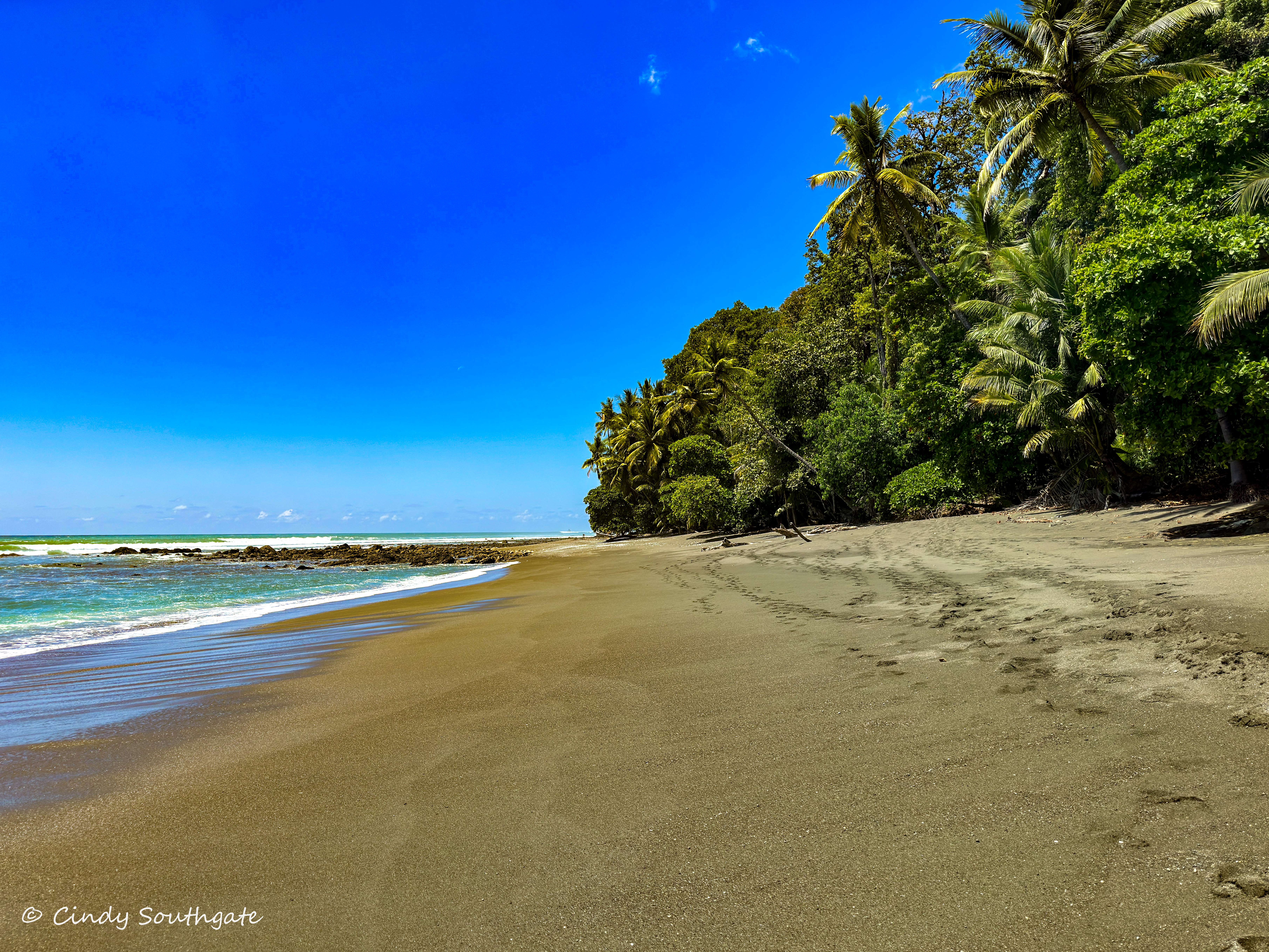
Some of the beach was covered with soft sand, which was a bit difficult to walk on. It was hard to get any traction while also trying to avoid getting it in your shoes. In some spots we also had to be careful not to step on small rocks. It became a bit more rocky as we got closer to the ranger station.
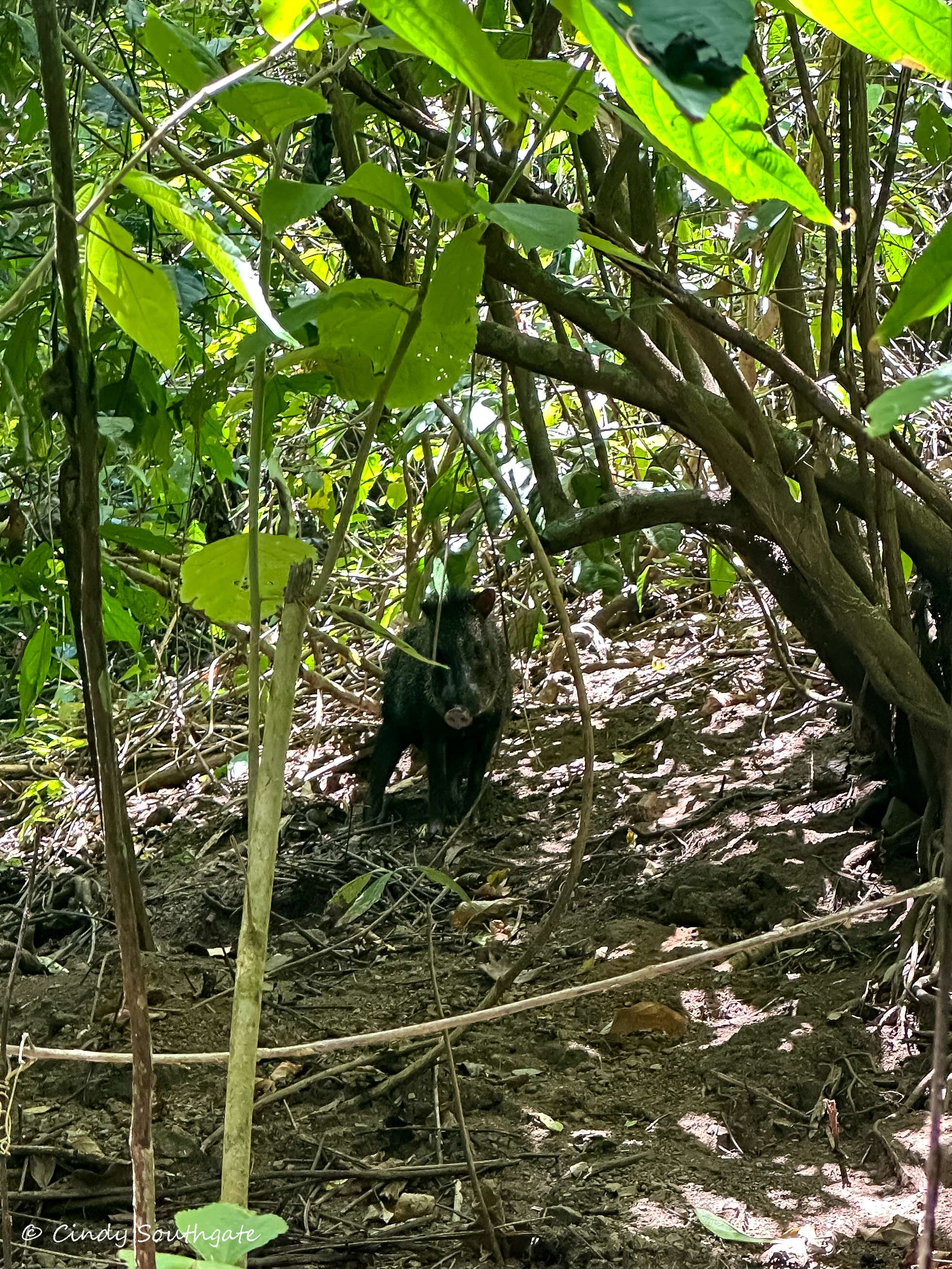
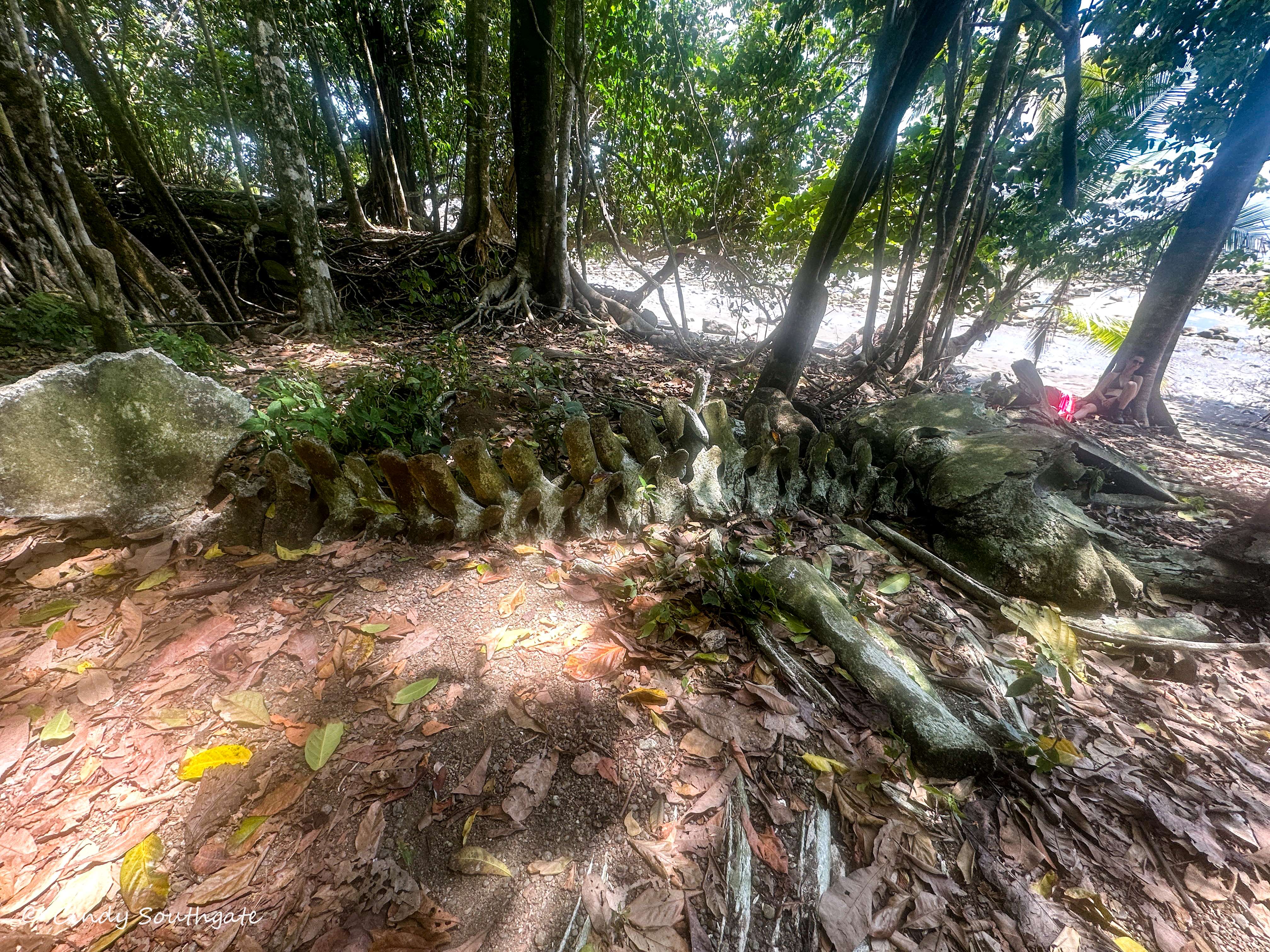
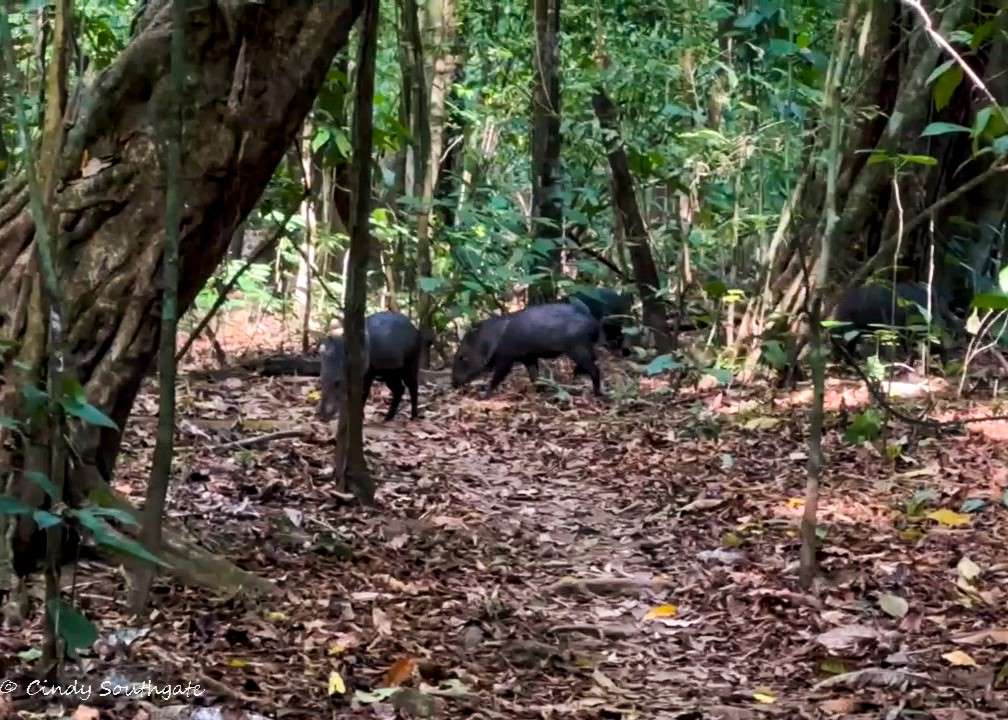
Back in the forest we saw a fairly large group of Peccaries. They look like pigs but are not closely related. They are considered one of the most dangerous animals in Costa Rica because they will attack if you threaten their young and they have very powerful jaws. We also saw some whale bones that had washed up on the beach.
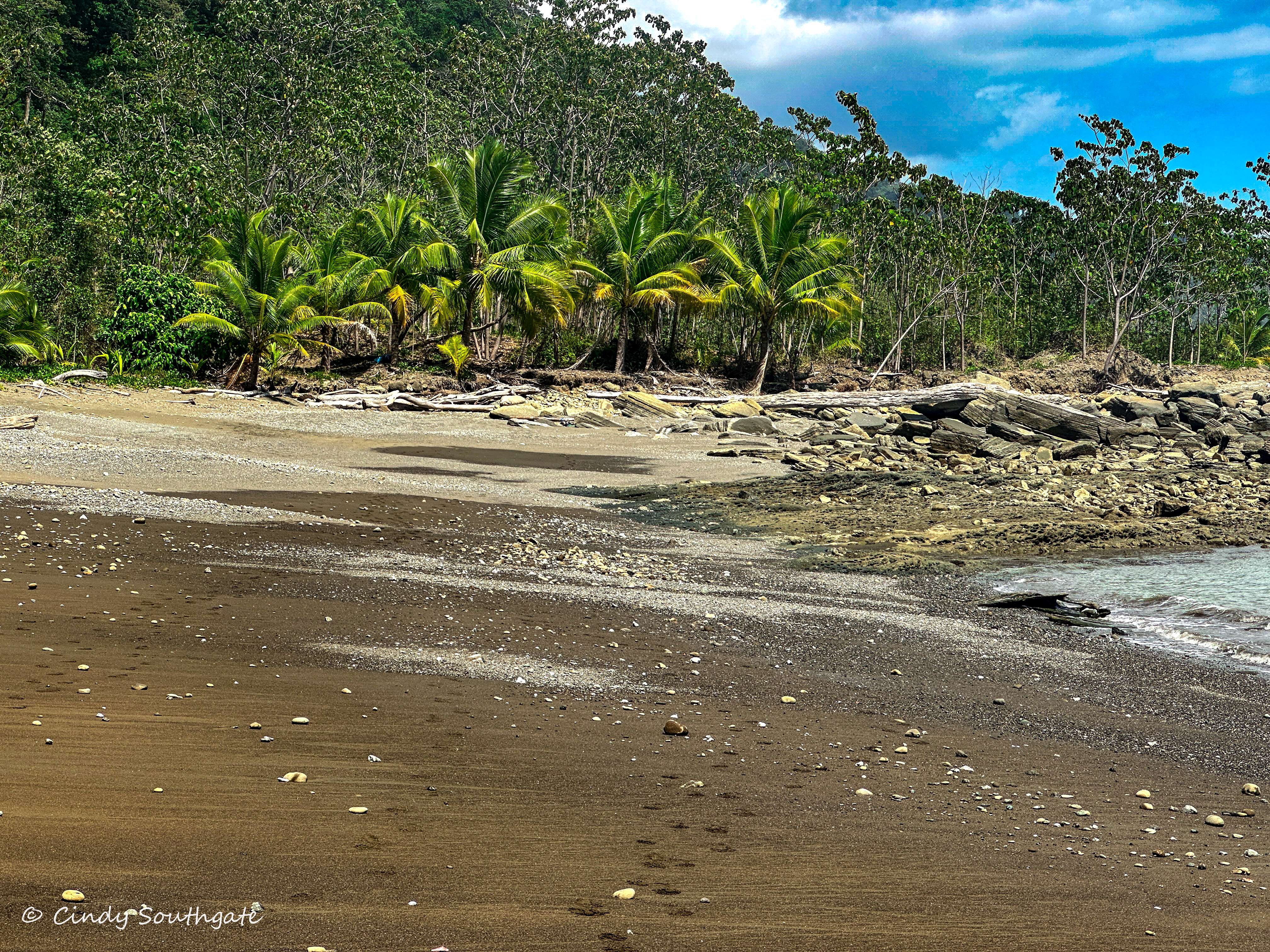
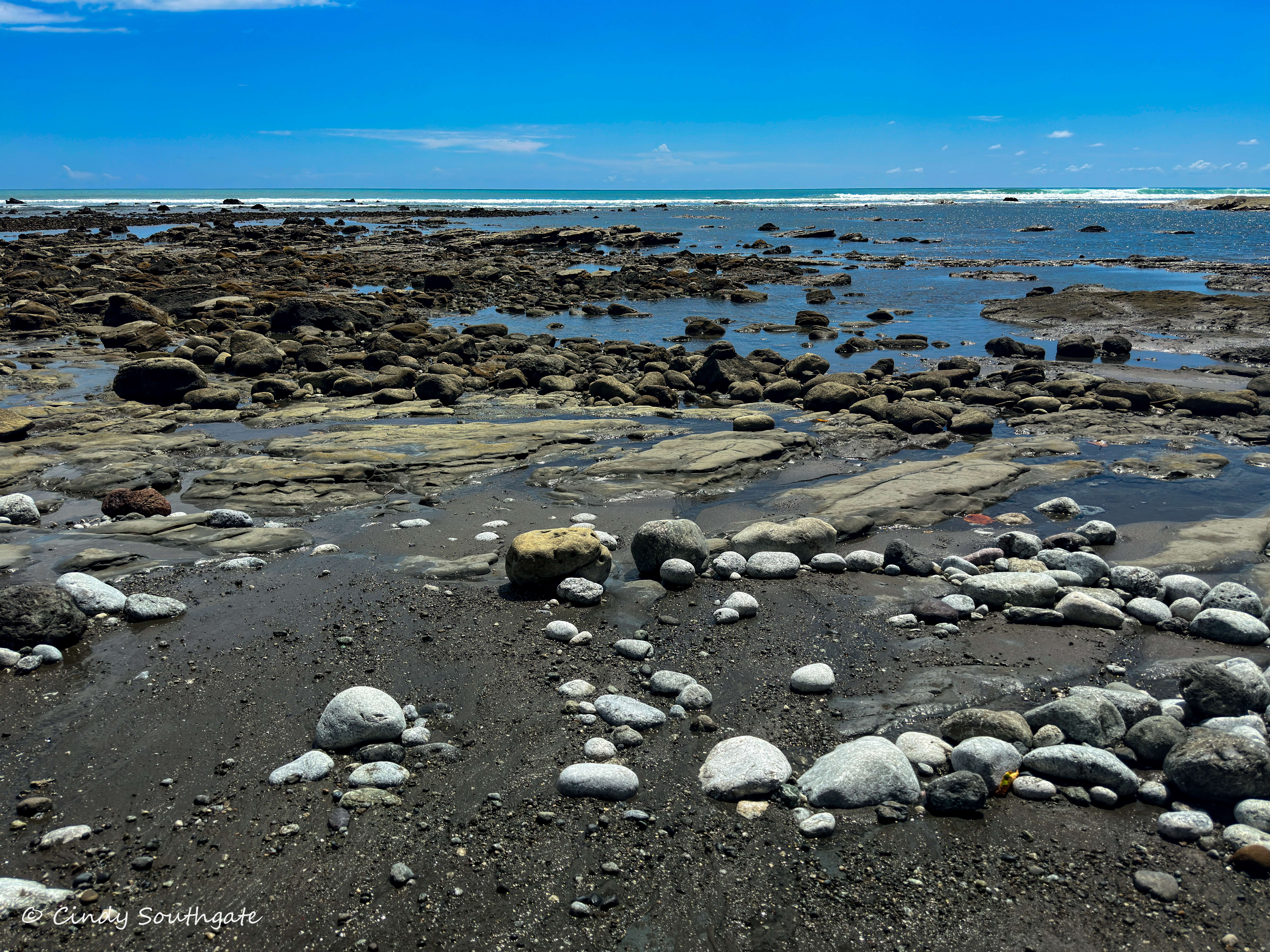
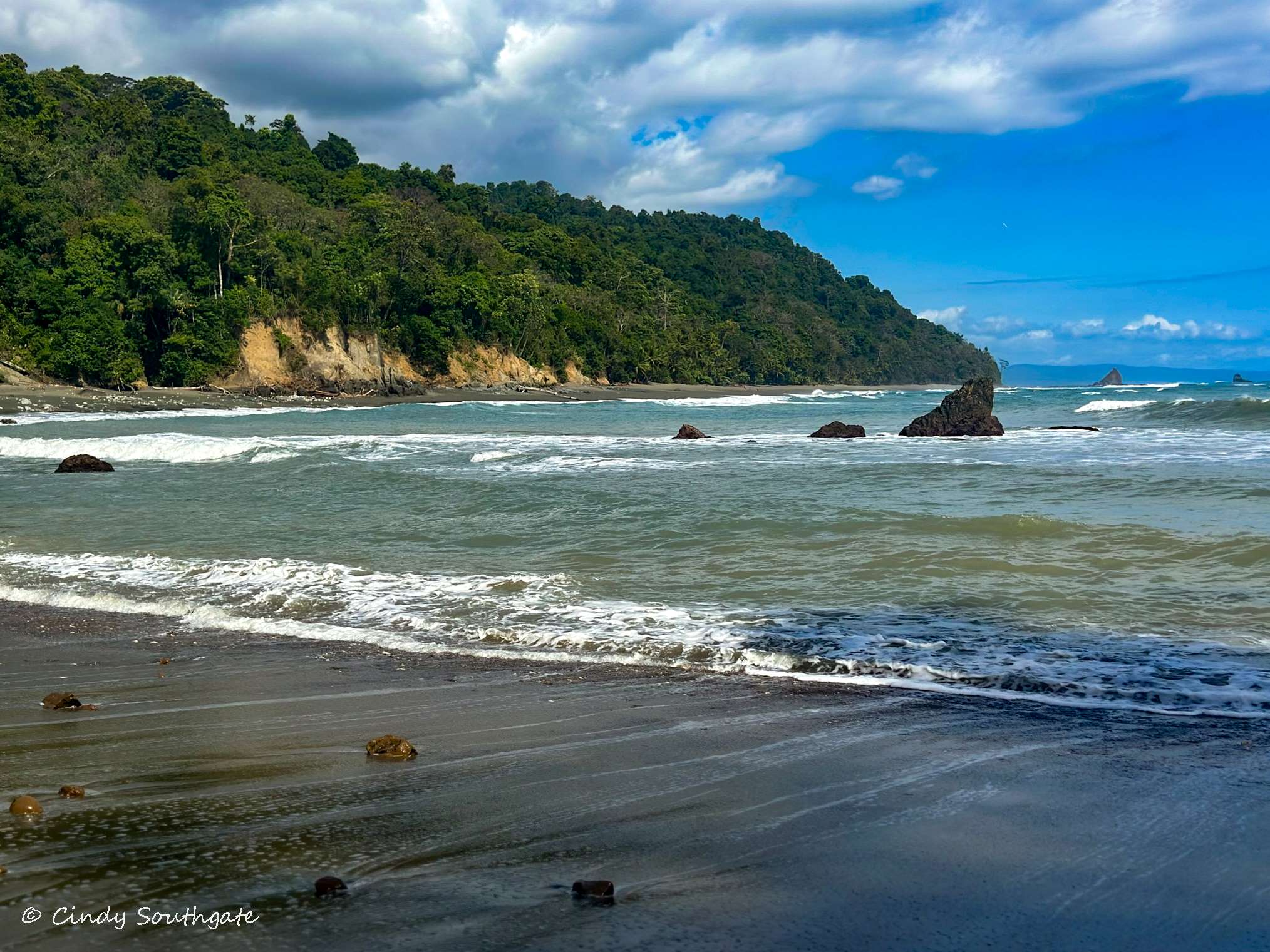
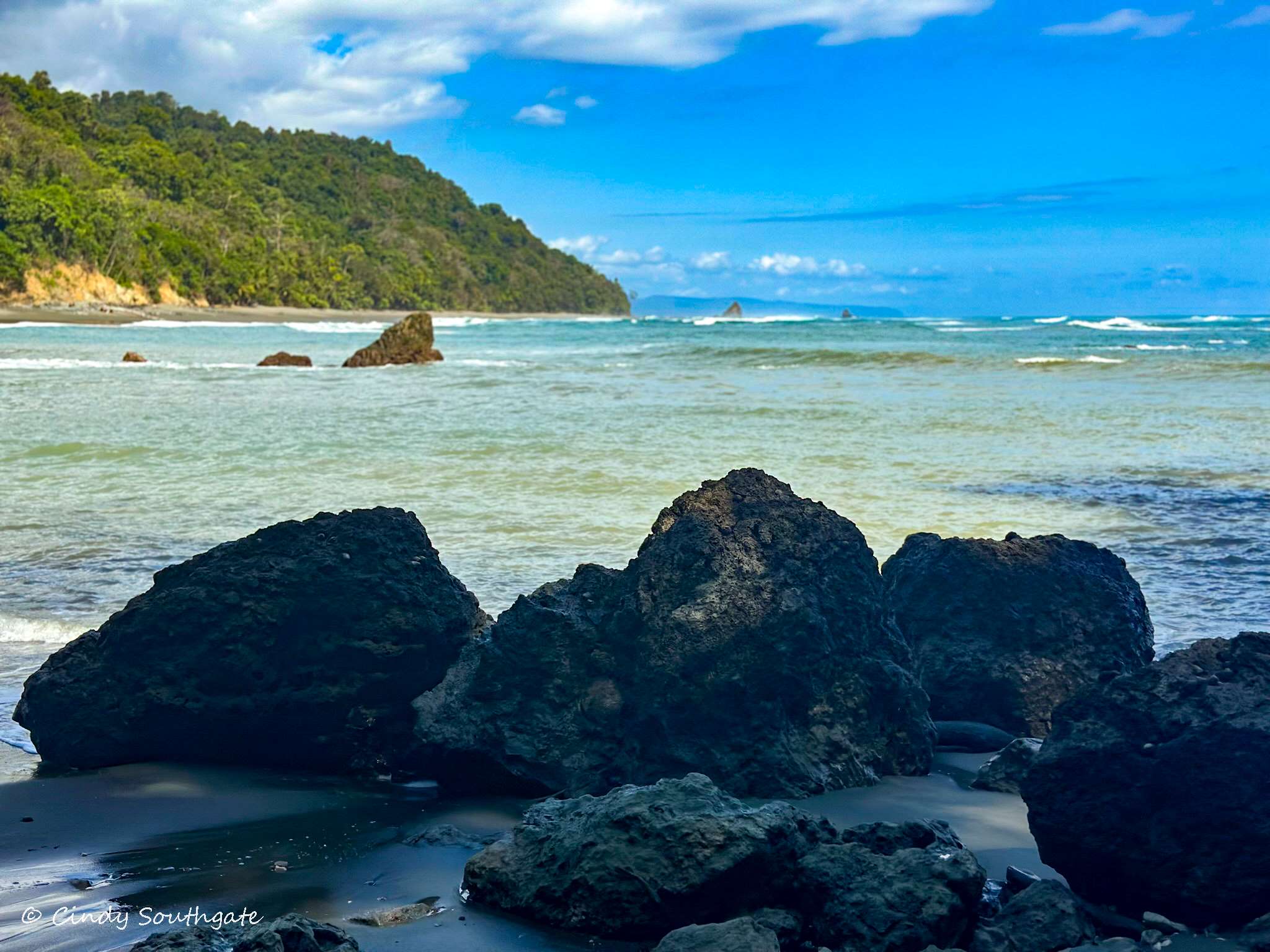
When we got to the end of this beach we had a choice to make. We could either rock hop while timing the waves or climb the rocks up to a trail. We decided to climb. It was very steep, technical and the vertical climb was worse than we expected. We brought our water shoes for the river crossings and chose to wear them because they were less likely to slip on the rocks.
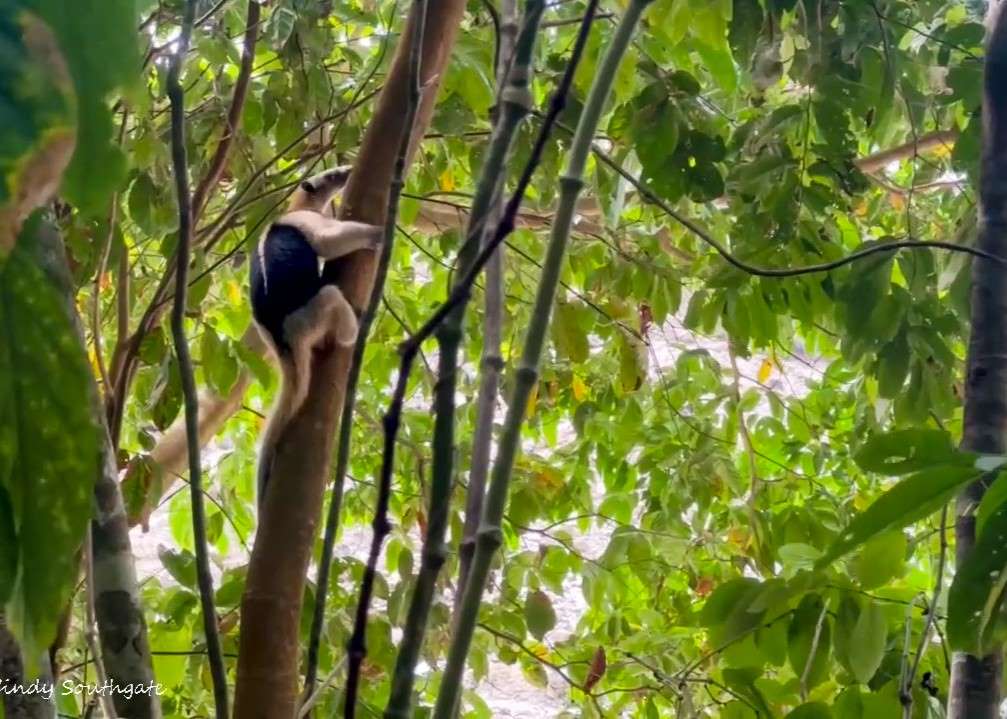
At the beginning of the day our guide asked what we most wanted to see. I said I really wanted to see a Tamandua. The first time I had even heard of this animal was when I saw it in one of my grandchildren’s baby books. The Tamandua is a type of Anteater. They are around 110 cm long and weigh about 10 lbs. They are gold and black and look like they are wearing a vest. Their tongues can be up to 40 cm long. They also have a long prehensile tail. We hadn’t seen any on our previous trips to Costa Rica so I had low expectations but we got lucky and actually saw two at different times.
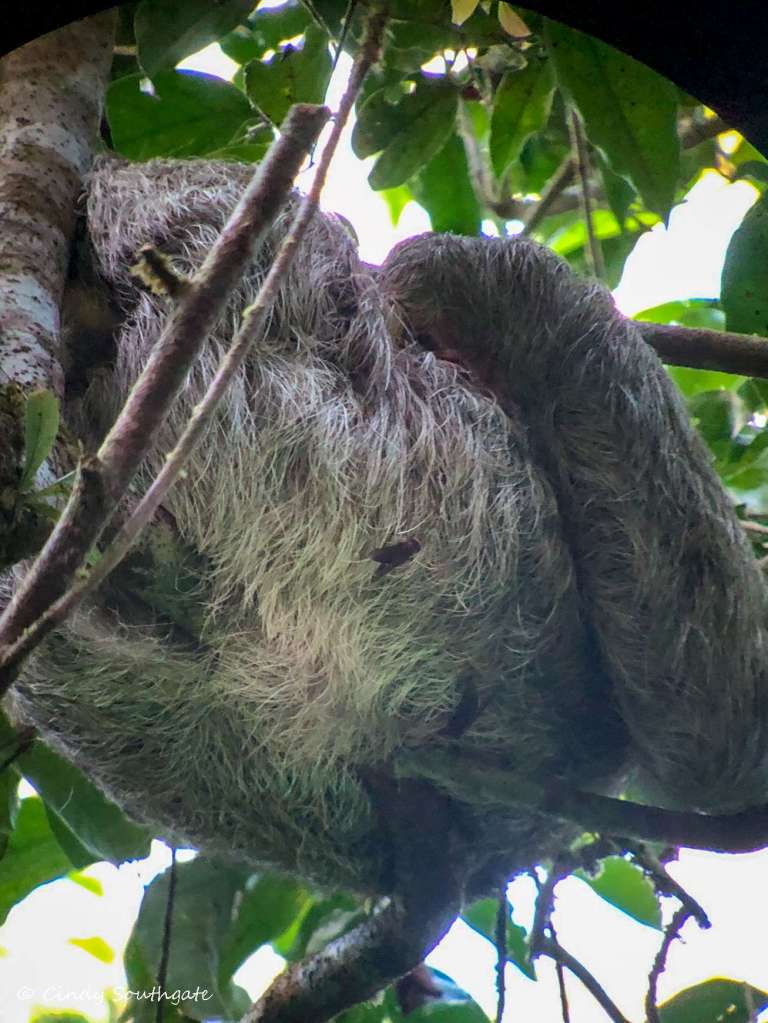
We also saw a sloth. They can be hard to spot as they tend to stay quite high up in the crooks of tree branches.
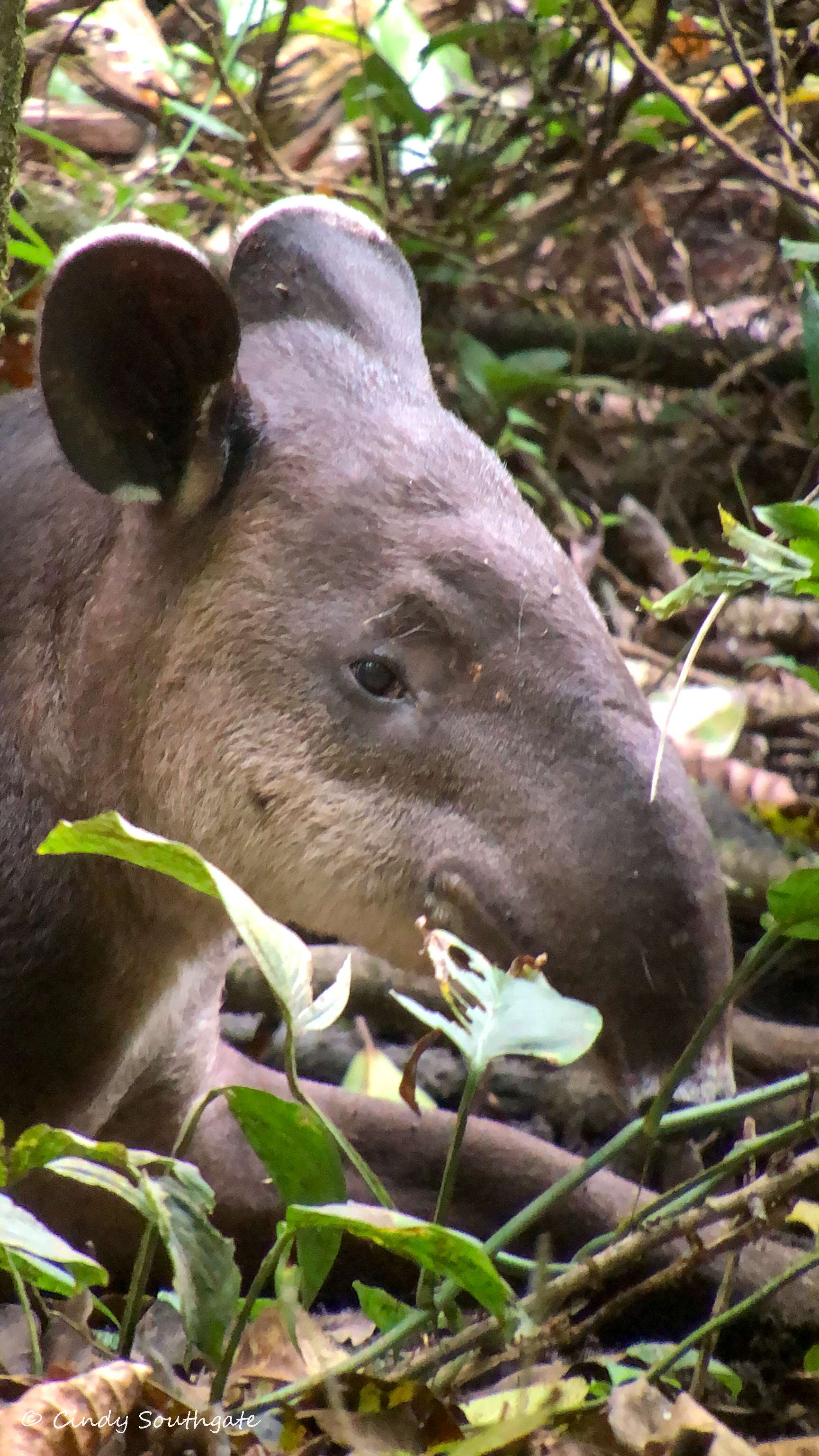
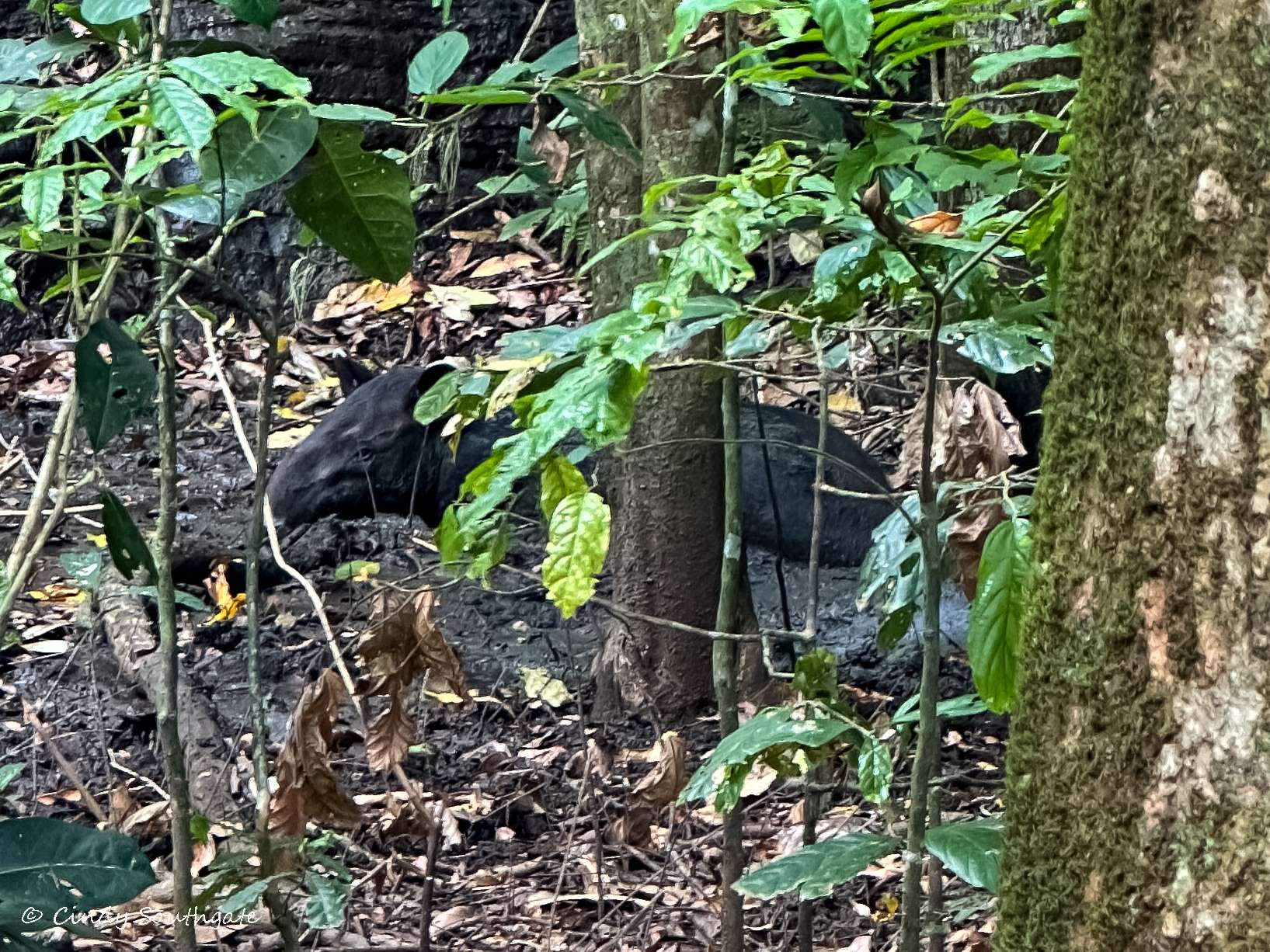
We spotted a group of 5 Baird’s Tapirs, including a mom with her baby. Our guide said it was unusual to see that many in a group. They are the largest mammal in Costa Rica weighing up to 880 lbs. They have a long flexible snout used to gather leaves and stems.
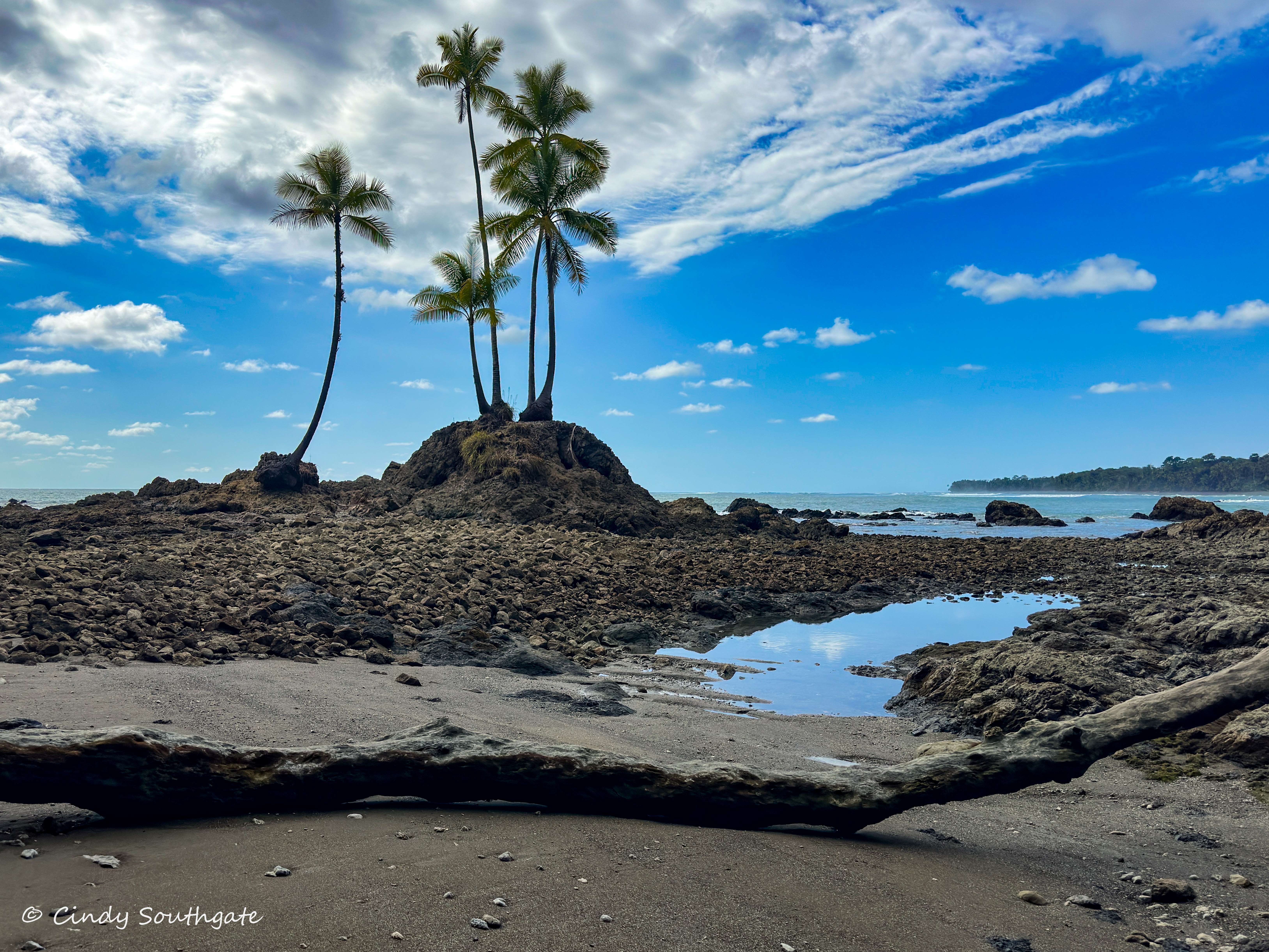
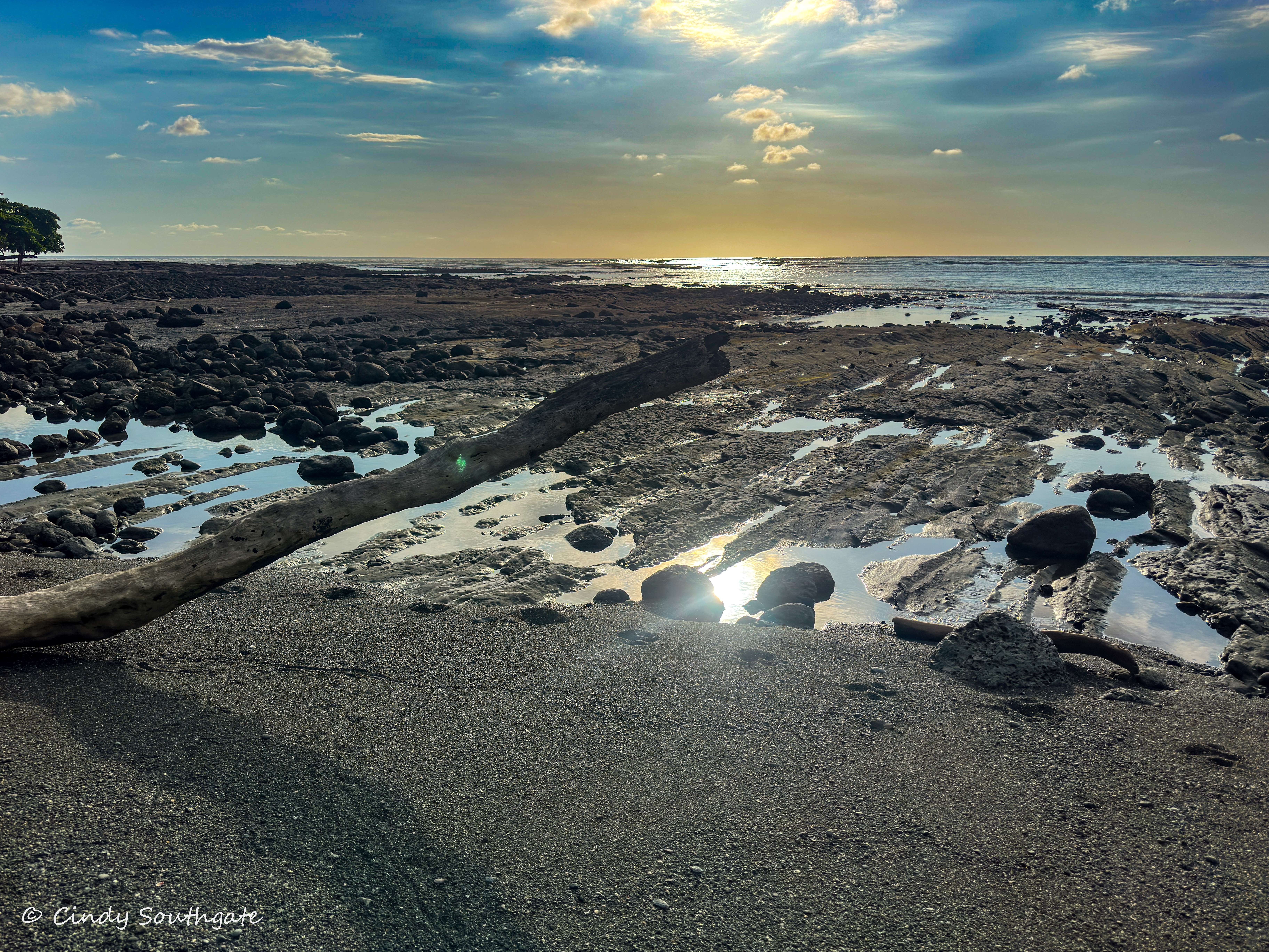
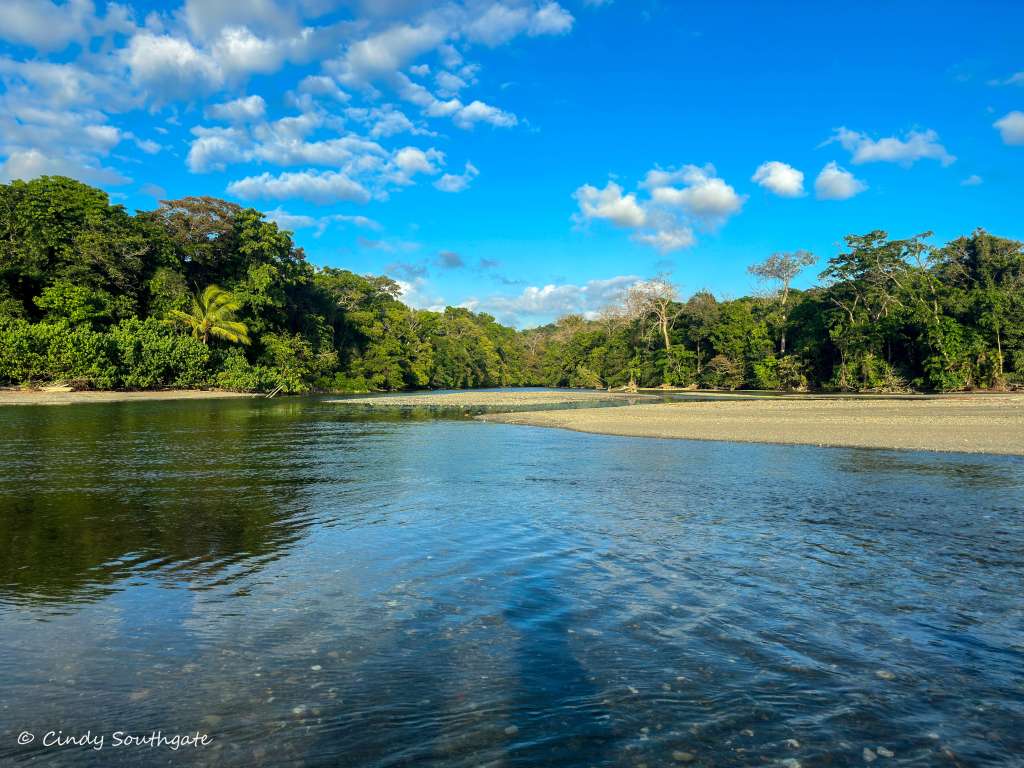
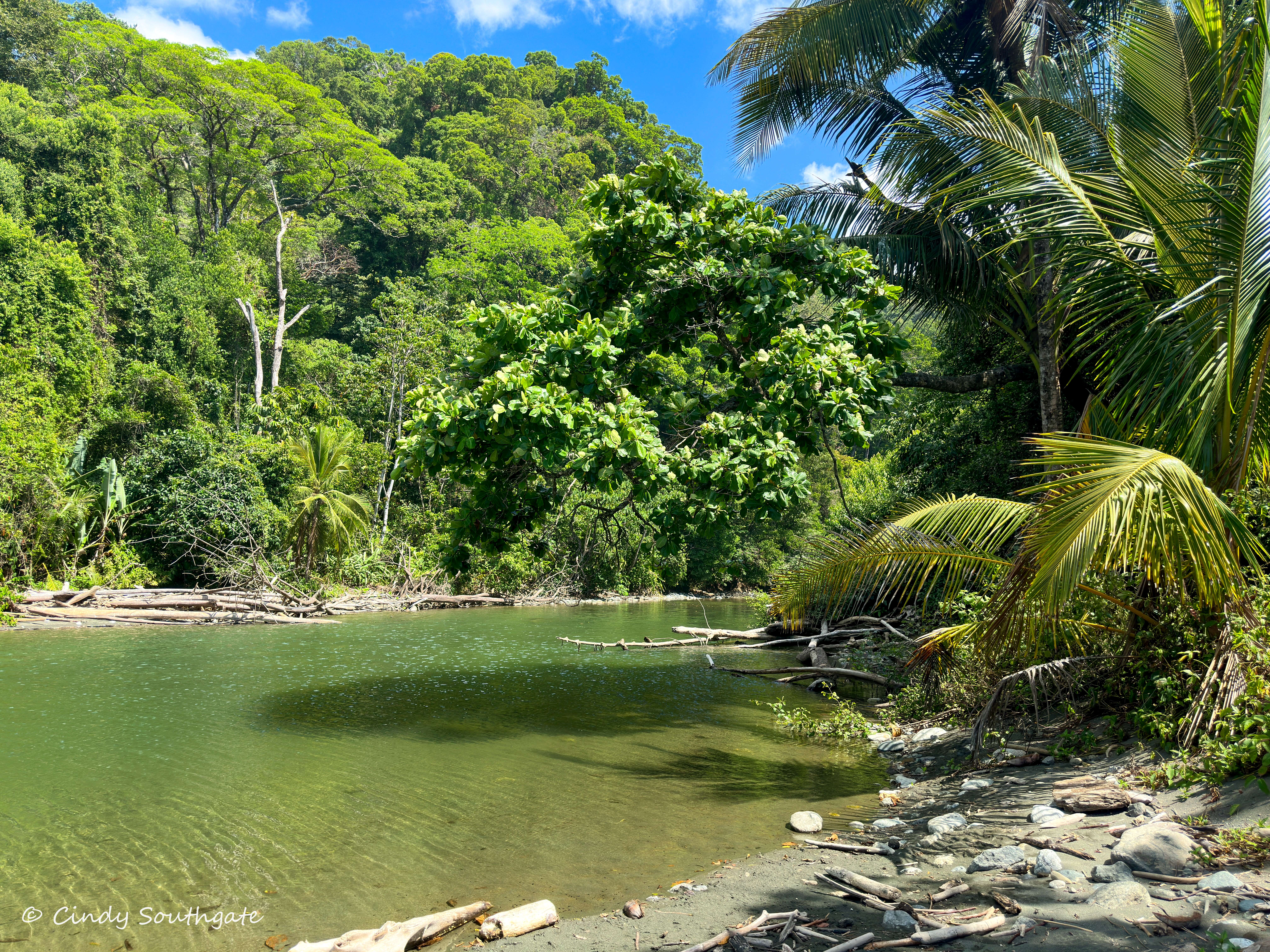
The rivers flowing into the ocean were very picturesque. The water was low so it was very easy to cross. None of them were deep enough to get our clothes wet.
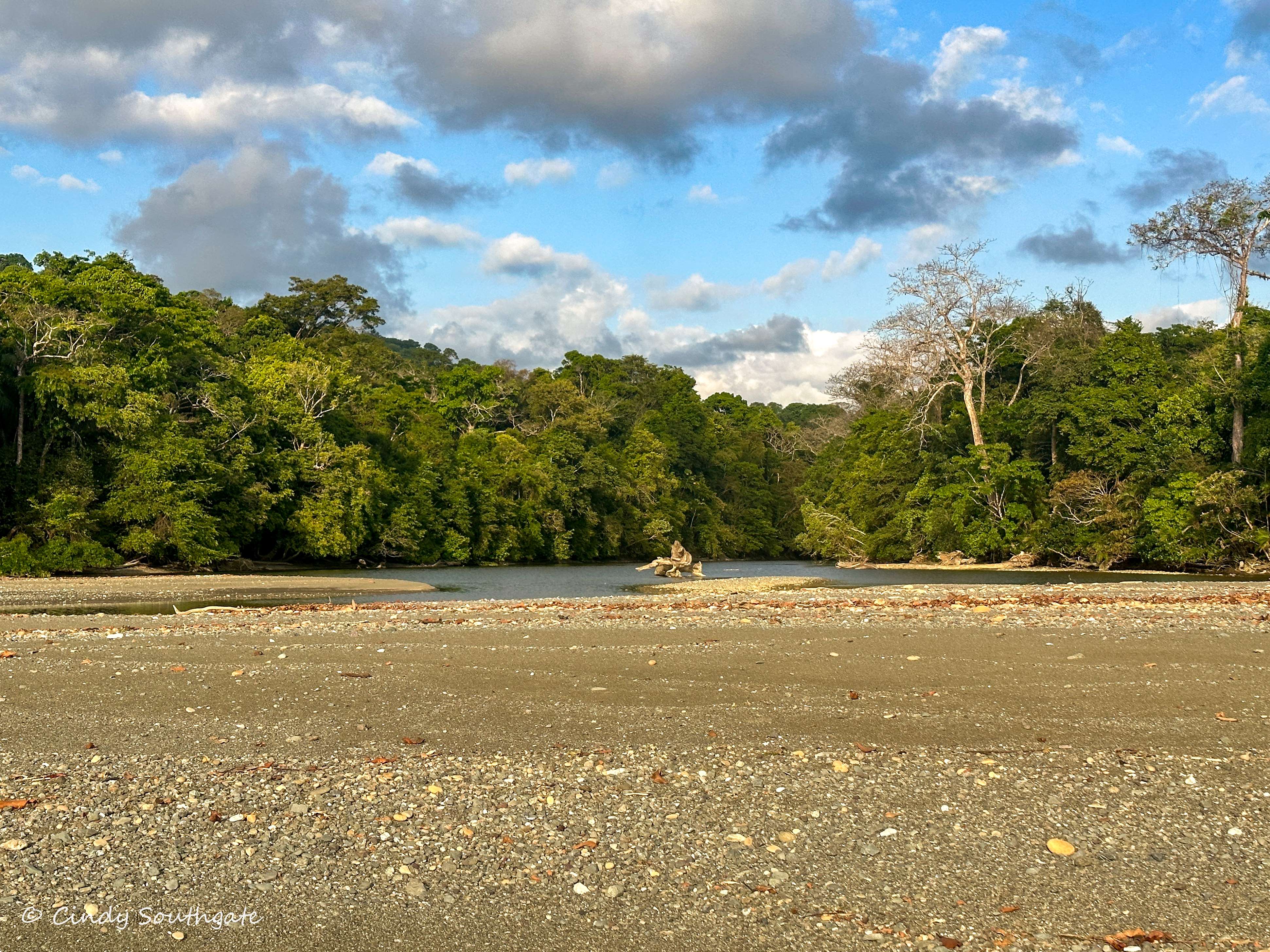
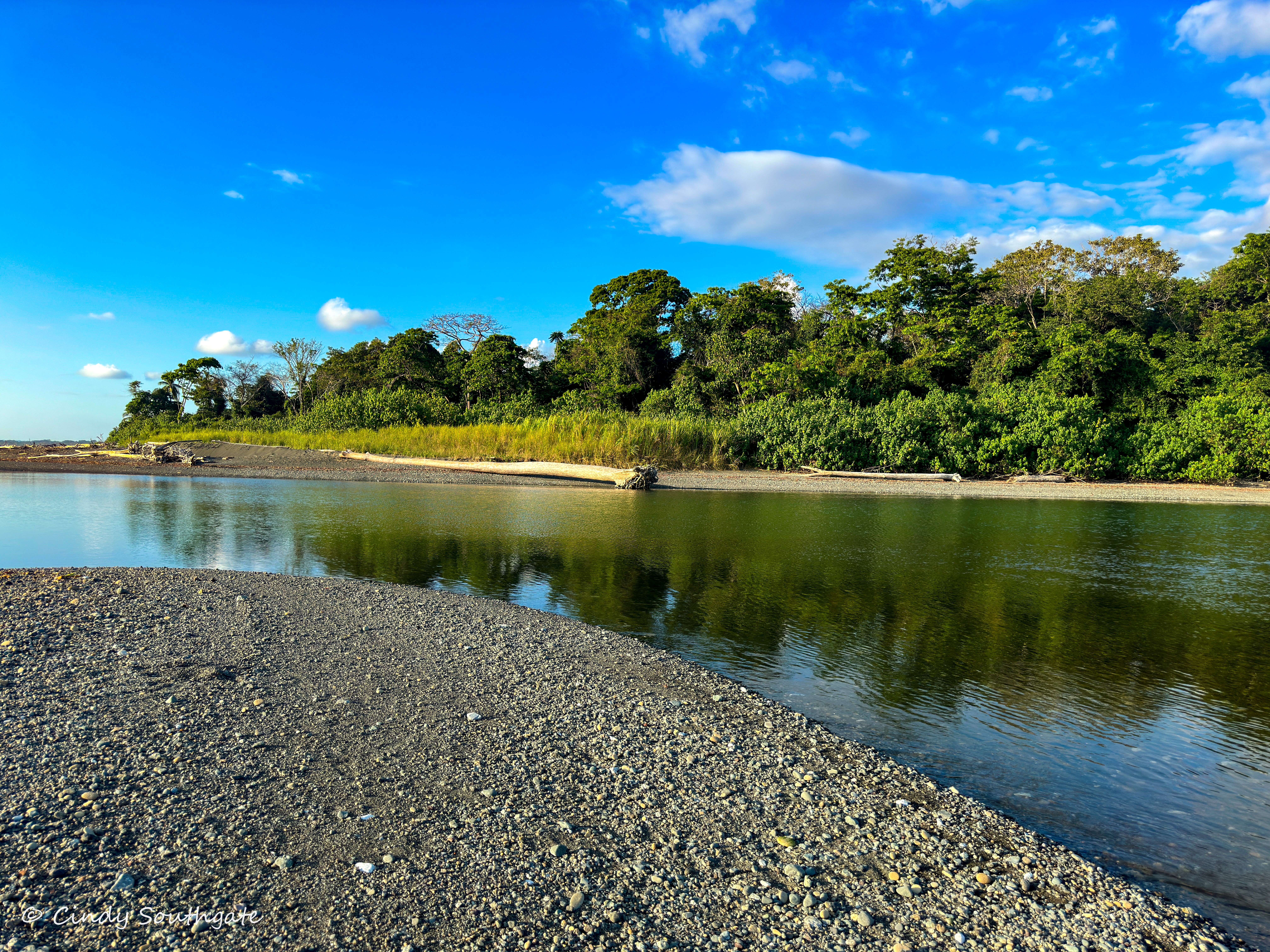
We were both getting tired as we got closer to Sirena ranger station. Mike took over carrying one of my bags for me. When we reached the station Josue gave us a tour and explained how everything worked. He also brought us a welcome drink – neither of us can remember what was in it, but we do remember that we didn’t like it. We already knew that there is no smoking or alcohol allowed anywhere in the National Park.
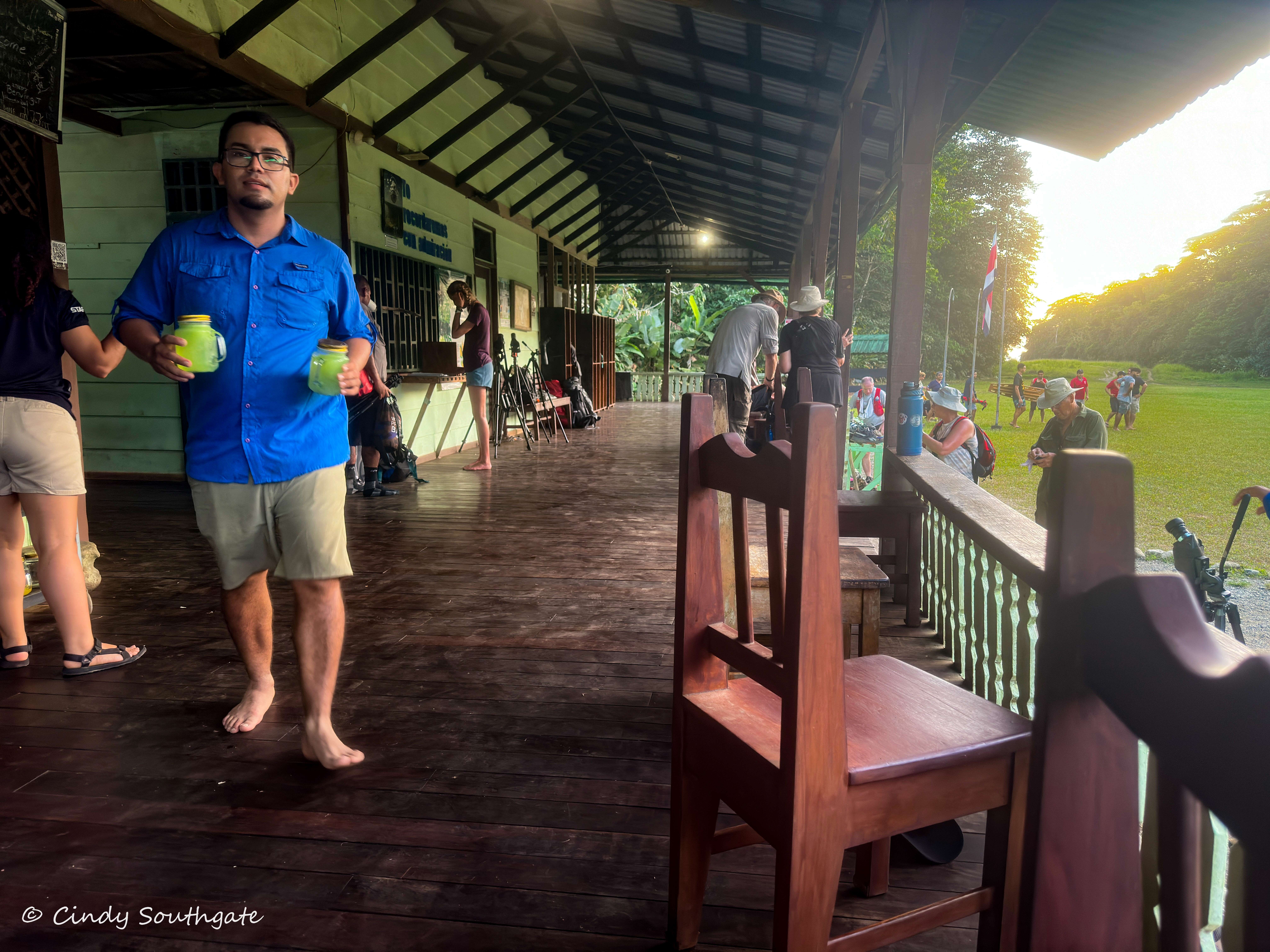
We were told to bring flip flops to wear while in the station. There was a shelf by the stairs for everyone to use to store their muddy shoes. This helped keep the floors clean. There were several different areas connected by raised and covered walkways. There were no walls. The station had 70 bunk beds and a separate area with bathrooms and showers. There was also an area to wash your clothes and lines to hang them to dry.
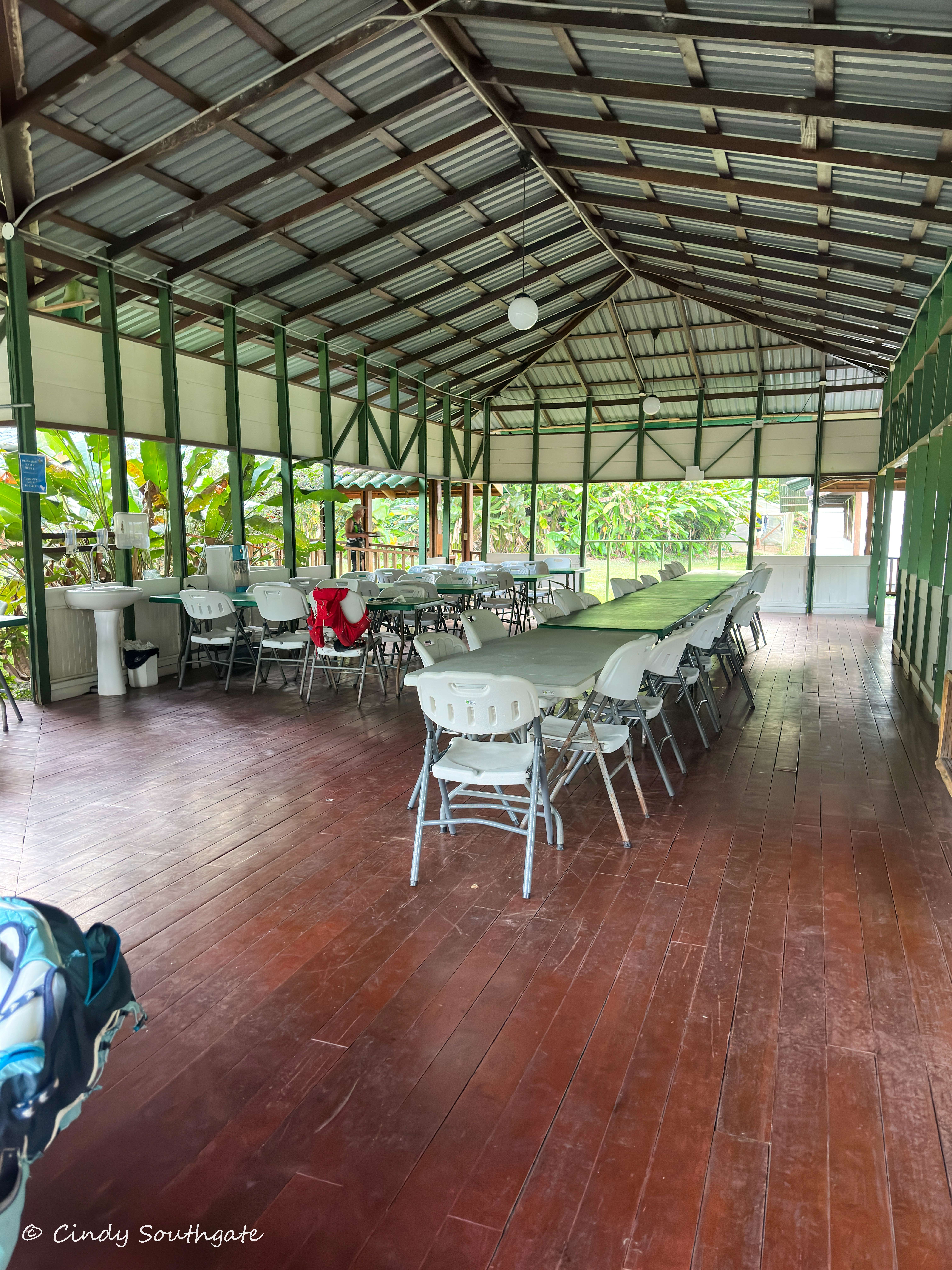
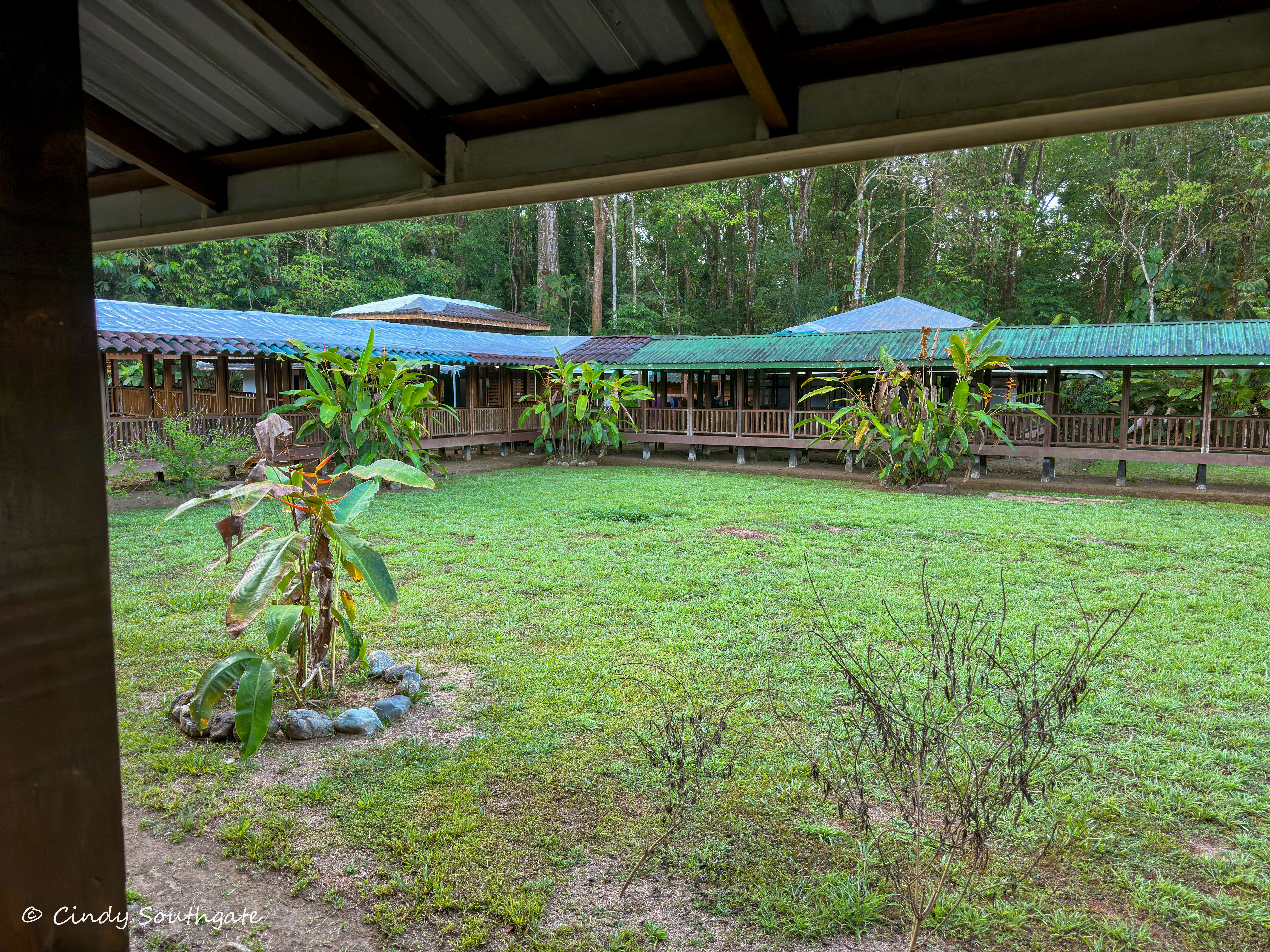
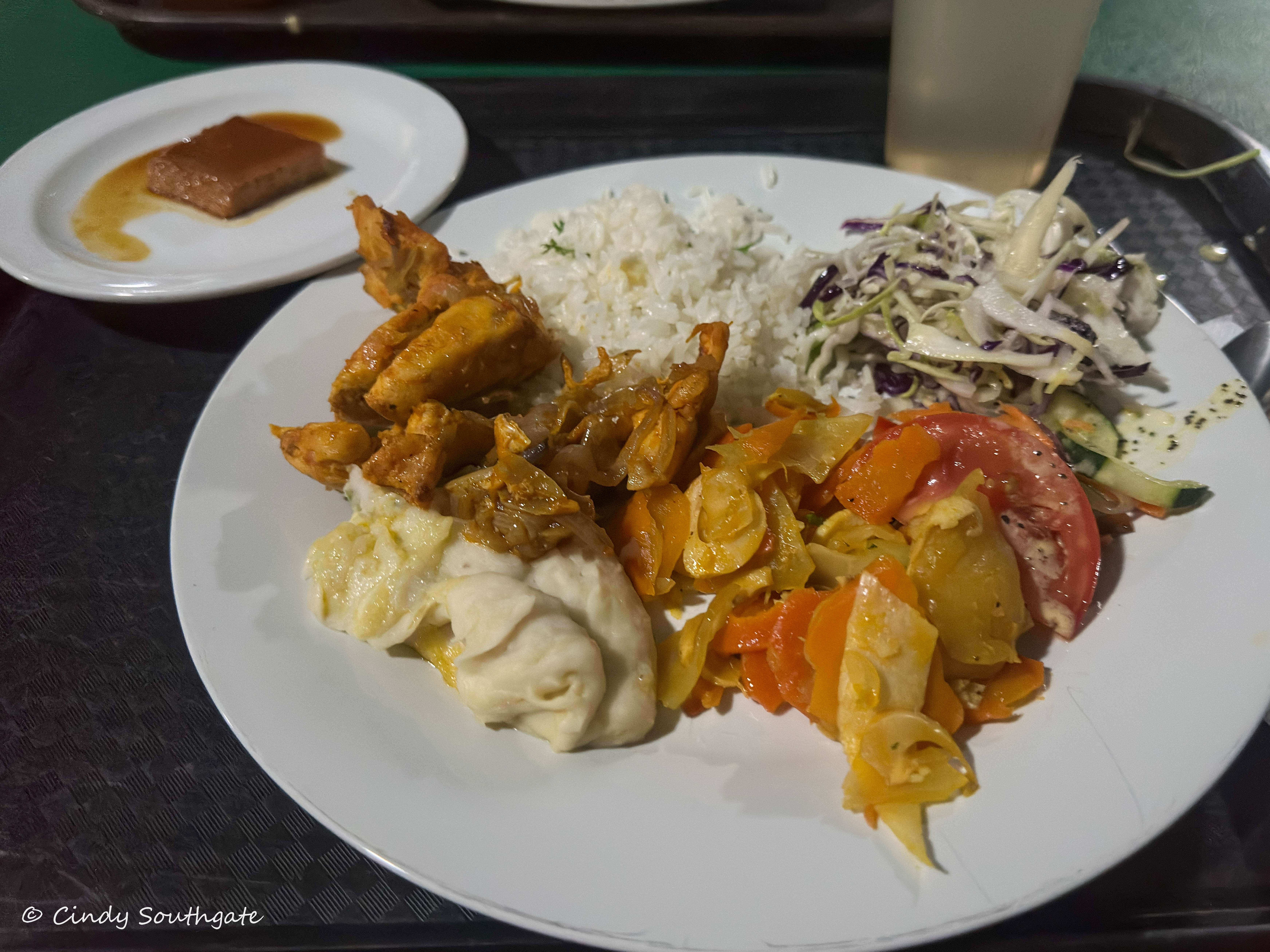
Dinner was served in the cafeteria between 6 pm and 7 pm. It was buffet style so there was plenty to eat. There were even desserts. There was a long bench in the hallway and everyone would sit and wait while they let people go in two or three at a time.
Lights out was at 8 pm and that meant no power as well. The station runs on solar power but they also have a back up generator. No one was allowed to leave the building as it wouldn’t be safe with the wild animals around. Most people wanted to be up at 5 because the best wildlife viewing is usually in the morning.
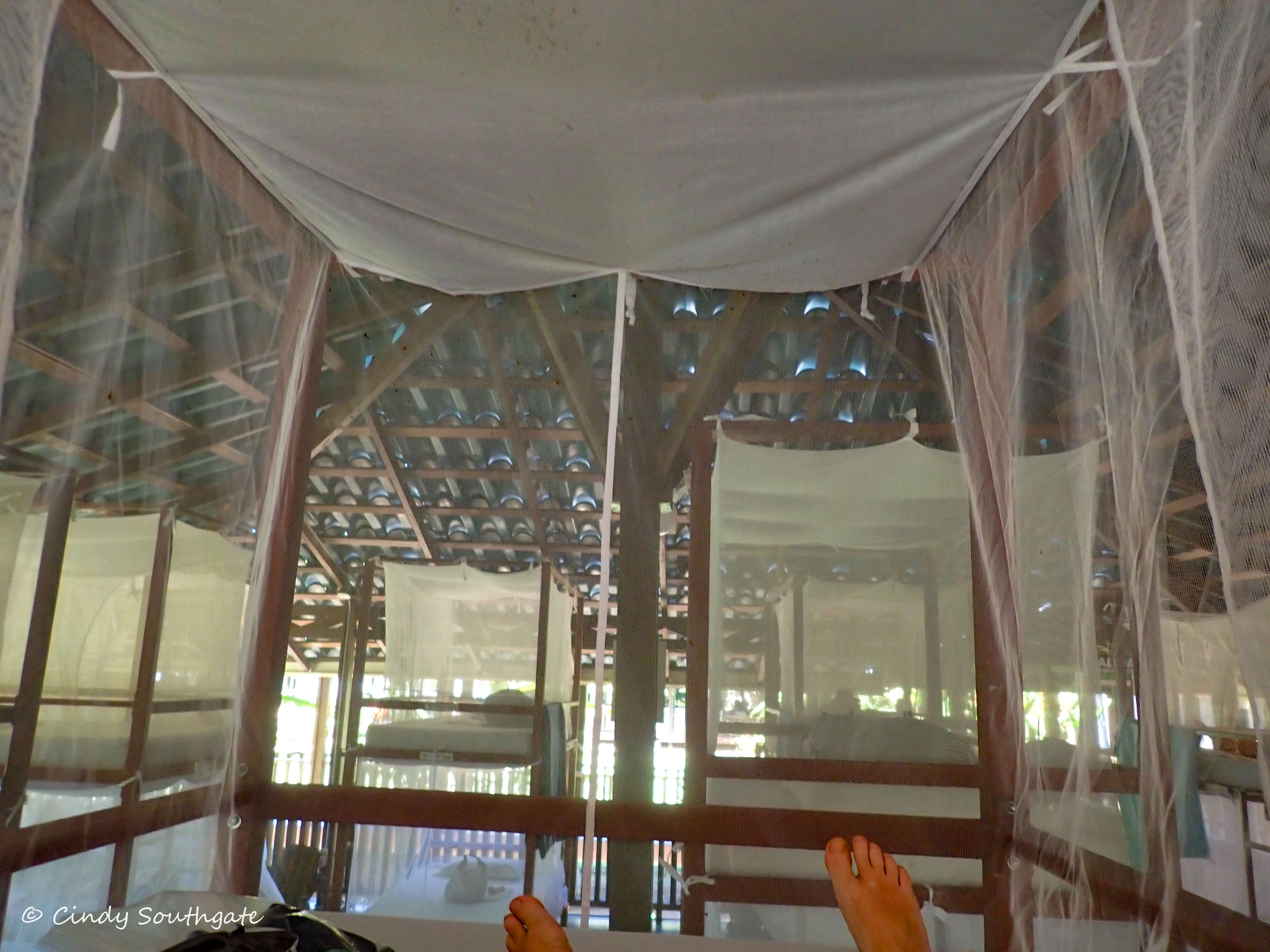
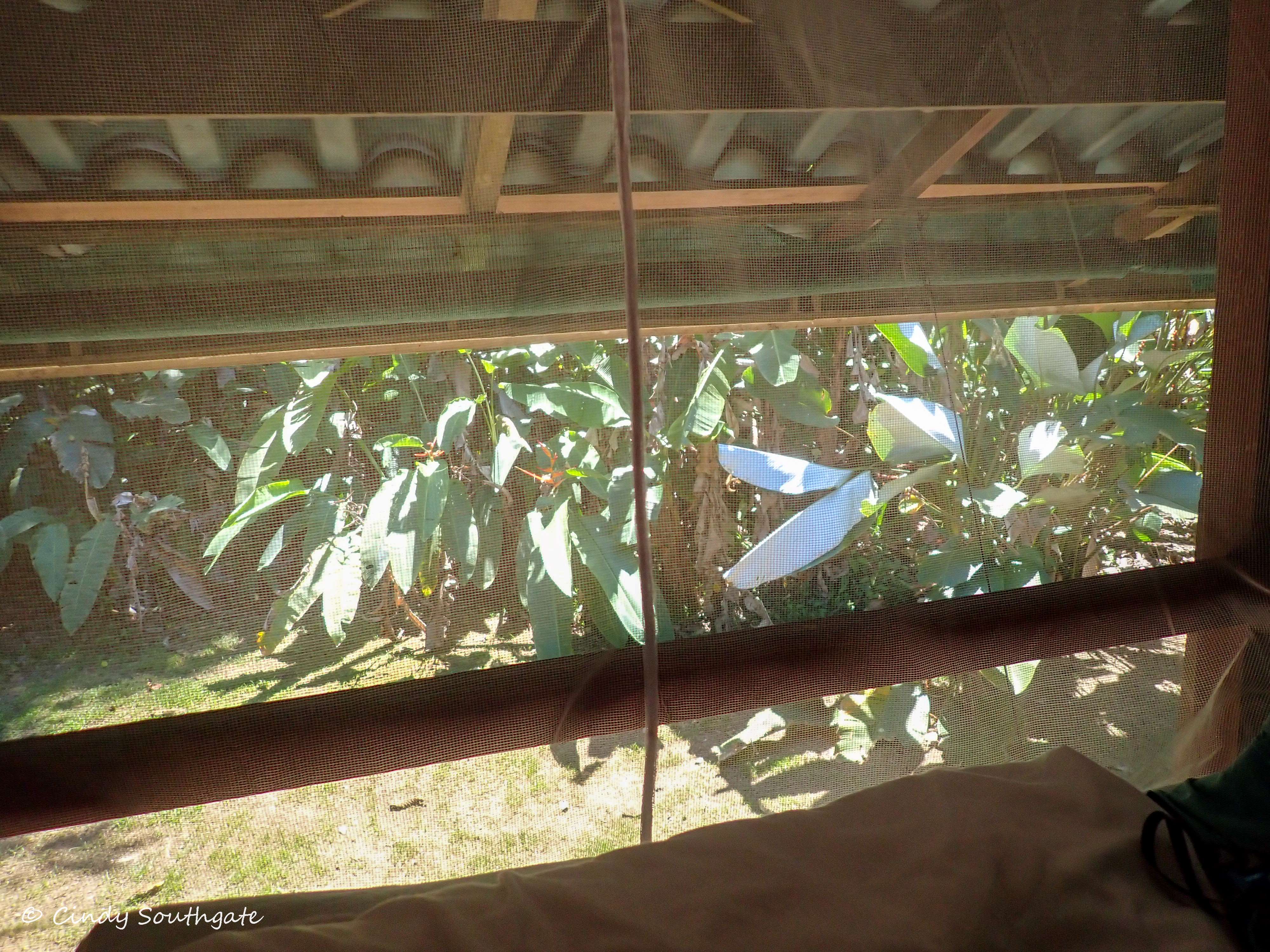
This was not a very romantic place to be in for Valentines day! This is the view from the foot and head of my bed. The bunks were fairly close together and encased in mosquito netting. A sheet and a small pillow were provided. Getting into the top bunk was NOT fun. The ladder had very small metal rungs which dug into my feet and it was a challenge to crawl under the netting into the tiny space. Being short was probably an advantage here because I kept some of my belongings at the bottom of my mattress including a small flashlight in case a nighttime bathroom visit was necessary. We brought our Kobos with us but we didn’t really have time to read. I also had ear plugs and some sleep meds which helped a lot. I hoped for a good sleep as I was looking forward to our full day in Corcovado tomorrow.

 Cindy Southgate's Travels
Leave a comment